Is a 371HP Used HOWO Tractor Truck Enough for Cross-Border Freight Transport?
Yes, a 371HP used HOWO tractor truck is powerful enough for many cross-border freight transport operations, including container haulage and general cargo deliveries across Africa. A properly refurbished 6x4 model can handle substantial highway loads. Buyers should select it according to gross combination weight, axle gearing, route gradients, and verified mechanical condition.
1. How Much Freight Can a 371HP Used HOWO Tractor Truck Handle on Cross-Border Routes?
A 371HP HOWO tractor can haul substantial freight, but its permitted load depends on gross combination weight (GCW), manufacturer ratings, and legal axle limits. GCW includes the tractor, semi trailer, cargo, fuel, and other equipment. Horsepower determines available engine output; it does not establish the legal carrying capacity of the vehicle combination.
Consider an illustrative cross-border container operation using the following weights:
| Component |
Example Weight |
| HOWO 6x4 tractor |
8.8 tons |
| Empty semi trailer |
7.2 tons |
| Container and cargo |
28 tons |
| Total GCW |
44 tons |
This 44-ton combination illustrates a realistic load calculation, not a universal 371HP capacity rating. Buyers must verify the tractor's approved GCW, fifth-wheel loading, trailer capacity, and individual axle weights. A 371HP used HOWO 6x4 tractor truck provides a relevant product configuration reference.
2. How Do Engine Torque, Gearbox Ratios, and Rear Axle Configuration Affect Pulling Power?
Engine torque and drivetrain ratios determine how effectively a 371HP HOWO tractor starts and moves a loaded semi trailer. The SINOTRUK WD615.47 engine produces 371HP at 2,200 rpm and 1,500 Nm of maximum torque at 1,100–1,600 rpm in the documented HOWO-NX configuration. Its operating characteristics support loaded highway transport when matched with suitable gearing.
The HW19710 transmission has ten forward gears, including a 14.28 first-gear ratio for torque multiplication during loaded starts. The referenced HOWO-NX model uses MCY12BGS single-reduction rear axles; other refurbished HOWO tractors may use different axle assemblies and ratios. Buyers should verify the actual axle nameplates rather than assuming every 371HP tractor has identical gearing.
The SINOTRUK vehicle specifications published by CFAO Mobility identify a 70,000 kg manufacturer-rated GCW for one HOWO-NX configuration. This is a mechanical specification, not permission to operate at 70 tons on public roads.
3. Can a 371HP Used HOWO Tractor Truck Handle Mountain Roads, Long Climbs, and Heavy Loads?
A correctly maintained 371HP HOWO tractor can climb mountain roads with an appropriately loaded trailer, although sustained climbing speed decreases as gradients and combination weight increase. The greatest challenge is maintaining engine performance during long uphill sections rather than accelerating on flat highways.
Consider a sustained 5% road gradient: the vehicle gains approximately 5 meters of elevation per 100 meters of horizontal travel. A loaded tractor requires suitable lower gears to maintain engine speed and prevent lugging. Drivers must monitor coolant temperature, engine response, and transmission behavior throughout the climb.
Routes connecting Dar es Salaam with Zambia or Mombasa with inland East African destinations include varying terrain and long freight distances. A 371HP tractor is suitable for many such journeys, while frequent heavy-load climbing makes additional horsepower commercially valuable. Actual route gradients and operating weights should determine the final selection.
4. How Does a 371HP HOWO Tractor Compare with 380HP, 400HP, and 420HP Models?
The main advantage of a 371HP HOWO tractor is its balance between acquisition cost and normal freight performance. Higher-horsepower models provide additional power for maintaining speed under demanding loads, but the benefit depends on engine torque characteristics, gearing, and drivetrain condition.
| Engine Power |
Increase Over 371HP |
Main Buying Consideration |
| 371HP |
Baseline |
General freight and controlled GCW |
| 380HP |
2.4% |
Small increase in rated power |
| 400HP |
7.8% |
Greater reserve for frequent climbs |
| 420HP |
13.2% |
Higher sustained power demand |
These percentages compare rated engine power, not actual climbing speed or fuel consumption. A well-maintained 371HP truck can be a better purchase than a poorly maintained 420HP vehicle. Buyers comparing used HOWO tractor trucks for export should examine complete drivetrain specifications before choosing a more expensive engine.
5. How Much Fuel Does a 371HP Used HOWO Tractor Consume on Long-Distance Routes?
Fuel consumption depends on GCW, cruising speed, gradients, driving habits, and mechanical condition rather than horsepower alone. A lightly loaded tractor on a paved highway will not consume the same amount of diesel as a fully loaded combination repeatedly climbing steep roads.
For planning purposes, assume an illustrative consumption rate of 40 L/100 km and a 600-liter fuel tank. The theoretical driving range is 1,500 km; reserving 20% of the fuel reduces the calculated planning range to approximately 1,200 km. These are calculation examples, not verified fuel-consumption figures for every HOWO tractor.
The referenced HOWO-NX specification lists a 600-liter tank, while other vehicles may have different or dual-tank arrangements. Cross-border operators should calculate fuel costs using actual trip records, including border waiting time, idling, and local diesel prices. Consistent vehicle maintenance also helps prevent unnecessary consumption.
6. Which Braking, Cooling, and Driveline Components Matter Most for Long-Distance Freight Transport?
Reliable braking, cooling, and driveline systems are essential for cross-border freight, particularly when a loaded tractor encounters long descents or high ambient temperatures. Engine horsepower cannot compensate for brake defects, overheating, or a worn transmission.
The air brake system should build and retain pressure according to the manufacturer's specifications. Mechanics must inspect brake chambers, reservoirs, air hoses, trailer connections, and the available auxiliary braking system. Controlled downhill speed requires appropriate gear selection and properly functioning brakes.
The cooling system deserves equal attention. Inspect the radiator, fan, water pump, thermostat, hoses, and coolant condition. Driveline checks should cover the clutch, gearbox, universal joints, differential assemblies, and axle seals. Any abnormal temperature rise, gear disengagement, or persistent vibration requires investigation before cross-border service.
7. What Should Buyers Inspect Before Purchasing a Refurbished 371HP HOWO Tractor Truck?
A refurbished 371HP HOWO tractor should be purchased according to verified mechanical condition, not exterior appearance or advertised mileage. Buyers need vehicle-specific evidence showing that the engine, transmission, brakes, chassis, and fifth-wheel coupling have been inspected and tested.
A proper inspection begins with cold starting, exhaust smoke, oil pressure, coolant condition, and abnormal engine noise. Road testing should cover clutch engagement, low- and high-range shifting, steering response, braking, and driveline vibration. Fifth-wheel locking components and mounting structures require separate checks.
Qingdao Alston Motors considers documented engine and gearbox refurbishment, operational testing, and mechanical inspection important when preparing used HOWO tractors for overseas freight applications. Buyers can use this inspection checklist for cross-border HOWO tractors to identify common defects before confirming an order.
8. What Axle Load, Vehicle Configuration, and Import Requirements Apply to Cross-Border Transport?
Cross-border operators must comply with the legal axle loads, gross weight limits, vehicle dimensions, and documentation requirements of every country on their intended route. A tractor's manufacturer-rated GCW does not override national or regional road regulations.
The East African Community Vehicle Load Control Act, 2016 sets a maximum gross vehicle weight of 56 metric tons, subject to a maximum of seven axles and the applicable bridge formula. Individual axle limits can reduce the permissible weight of a particular combination. This EAC framework must not be treated as the complete legal standard for routes extending into Zambia or other jurisdictions.
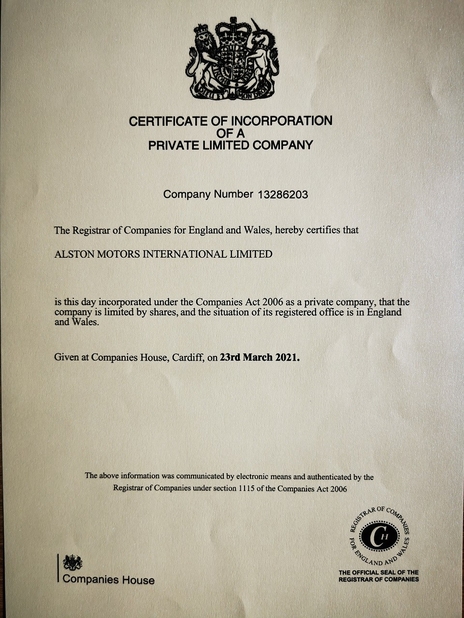
Buyers must also distinguish importing a tractor for registration from operating an already registered truck across a border. Steering configuration, emissions eligibility, road permits, insurance, and customs documents require separate verification. The Qingdao Alston Motors company profile outlines the company's vehicle configuration and export support.
9. When Should Buyers Choose a 371HP Used HOWO Tractor Instead of a Higher-Horsepower Model?
A 371HP used HOWO tractor is the practical choice when the intended combination operates within approved weight limits, routes have manageable gradients, and the drivetrain is mechanically sound. It provides sufficient power for many general cargo and container operations without requiring buyers to pay for additional horsepower that their normal routes do not need.
For repeated heavy-load mountain transport, 400HP or 420HP offers a stronger power reserve. Qingdao Alston Motors recommends selecting tractor power through actual GCW, road gradients, transmission ratios, axle configuration, and inspection results rather than horsepower alone.
Before purchasing, confirm cargo weight, trailer type, steering position, destination countries, and refurbishment requirements. Buyers can request a route-matched HOWO tractor quotation using these specifications.
Related YouTube Video
Refurbished Used HOWO Tractor Head Engine Start and Cab Inspection – AlstonMotors
This workshop video demonstrates engine starting and cab inspection after refurbishment. It is not a loaded cross-border performance test.
Frequently Asked Questions
1. Is 371HP enough for cross-border container transport?
Yes. A correctly configured 371HP tractor can handle many container routes within approved weight and operating limits.
2. How much weight can a 371HP HOWO tractor pull?
Its permissible GCW depends on the exact vehicle specification, trailer arrangement, and applicable road regulations.
3. Is 371HP enough for a loaded 40ft container trailer?
Yes, when the complete tractor-trailer combination satisfies manufacturer ratings and legal axle-load requirements.
4. Is 400HP better than 371HP for mountain routes?
Yes. A comparable 400HP configuration provides additional rated power for maintaining climbing performance.
5. Which engine is commonly used in a 371HP HOWO tractor?
The SINOTRUK WD615.47, a 9.726-liter six-cylinder diesel engine, is one common configuration.
6. What should buyers inspect before shipment?
Check the engine, gearbox, brakes, rear axles, fifth wheel, chassis, and documented road-test results.
7. Does a 70-ton manufacturer-rated GCW allow 70-ton road transport?
No. Actual road limits depend on the countries involved, axle distribution, and applicable regulations.
Written by: Bruce Li, Export Consultant
Reviewed by: Alston Motors Export & Technical Team
Company: Qingdao Alston Motors Co., Ltd

 Your message must be between 20-3,000 characters!
 English