UsedHowoTrucks.com — April 27, 2026
Table of Contents
Overview
On April 21, 2026, Reuters reported that global mining major BHP is keen to pursue large-scale copper exploration in Zambia — its most significant re-engagement with Africa in over a decade. The announcement came directly from Zambia's Ministry of Mines and Minerals Development following meetings in Lusaka with BHP's Head of Global Generative Exploration, Campbell McCuaig. Zambia is already Africa's second-largest copper producer and is targeting output of more than 3 million tonnes per year by 2031 — more than triple its current levels. BHP's return signals that international capital now views Zambia's Copperbelt as one of the world's most critical untapped copper frontiers. For operators and fleet buyers, the message is direct: Zambia's road-based copper haulage sector is entering a sustained expansion phase, and used HOWO dump trucks and tractor units remain the dominant and most cost-effective fleet solution on the ground.
BHP Returns to Africa: What Happened This Week
BHP has been largely absent from Africa since spinning off South32 in 2015. Its only subsequent foray — a stake in Tanzania's Kabanga Nickel project — ended with an exit last year. Its failed 2024 bid for Anglo American collapsed in part because BHP refused to absorb Anglo's South African operations. For years, Africa was effectively off BHP's active exploration map.
That changed on April 15, 2026, when BHP announced a series of exploration workshops across southern Africa — starting in Johannesburg, co-hosted with the JSE, with follow-up sessions in Namibia, Angola, and Zambia running through early May. The workshops are aimed at junior mining and exploration companies, academic institutions, and government geoscience teams, sharing BHP's global mineral systems methodology and building regional collaboration for deposit identification.
The Zambia leg produced the most significant signal. In a statement posted to social media on April 21, Zambia's mines ministry confirmed BHP is actively targeting large, concealed copper deposits using advanced detection methods. McCuaig told officials in Lusaka that many of the world's remaining large copper deposits are buried or hidden beneath geological cover — precisely the conditions found across Zambia's underexplored northern and western provinces. He welcomed Zambia's recent geoscience initiatives, including government-backed airborne surveys and the digitisation of geological records, describing them as conditions that attract serious international investment. (Source: Reuters / Mining.com, April 21, 2026)
Zambia's Ministry of Mines Permanent Secretary Hapenga Kabeta confirmed the government's commitment to creating a supportive investment environment and said collaboration with BHP is expected to boost copper production and attract further large-scale capital into the sector. For fleet operators running used HOWO 6x4 tractor trucks on Zambia's copper corridors, this confirms that ore volumes — and with them, haulage contract pipelines — are set to grow substantially over the coming decade.
Zambia's Copper Triple-Output Target by 2031
Zambia is not a new copper story — it has been mining copper since the 1920s. But the scale of its current ambition is unprecedented. The government has set a national target of more than 3 million tonnes of copper output per year by 2031, compared to under 1 million tonnes currently being produced. Achieving that target would make Zambia one of the world's top two or three copper producers by volume, alongside Chile and the Democratic Republic of Congo.
Several active expansions underpin the near-term trajectory. First Quantum Minerals is expanding at Kansanshi and Sentinel. Barrick Mining operates the large Lumwana open-pit mine in Northwestern Province. Ivanhoe's Kamoa-Kakula complex, straddling the DRC-Zambia border, is targeting 380,000–420,000 tonnes of copper output in 2026 alone, making it one of the world's highest-grade operations. Smaller producers are also ramping up across the Copperbelt's traditional base of Kitwe, Ndola, Mufulira, and Chingola.
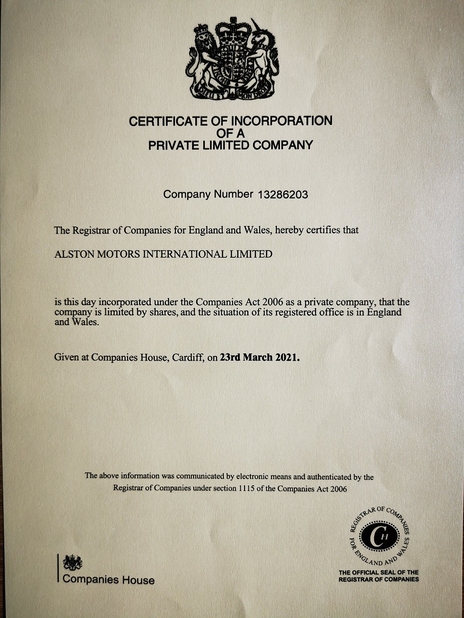
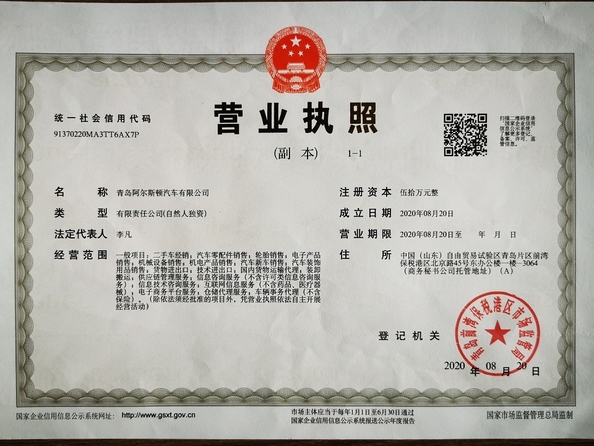
Each tonne of copper that leaves a Zambian mine site travels by road before it reaches a rail loading point or port. Even when the $1.4 billion TAZARA railway rehabilitation reaches full operational capacity — a process expected to take at least three years — road freight will still carry a significant share of mine-to-corridor movements, particularly for shorter hauls and new mines situated away from the rail line. The arithmetic is simple: more copper output means more truck movements. Qingdao Alston Motors Co., Ltd stocks verified pre-owned HOWO tractor and dump truck configurations that align directly with the payload and route requirements of Zambia's active mining corridors.
Road Freight Is Carrying the Load Right Now
The TAZARA line currently moves approximately 500,000 tonnes of freight per year — less than 10% of its designed 5-million-tonne annual capacity. That gap is entirely filled by road transport. Zambia's copper, cobalt, manganese, and coal cargoes move by heavy-duty truck along four primary corridors: the T2 Great North Road north toward Dar es Salaam, the T4 connecting to Tanzania, the M1 to the DRC border at Kasumbalesa, and the southern routes toward Durban and Beira.
On all four corridors, multi-axle used HOWO tractor trucks pulling copper concentrate tankers and flatbeds make up the majority of heavy freight vehicles in service. The combination of lower acquisition cost, widespread parts availability in Copperbelt towns, and an engine platform familiar to Zambian mechanics explains the brand's dominance. European trucks offer superior new-unit performance but are priced beyond the reach of most Zambian owner-operators and mid-tier fleet companies. Used HOWO units close that gap precisely.
With BHP now signalling intent to explore and potentially develop new large-scale deposits in areas not currently served by rail — including Zambia's north-western provinces — road freight demand will extend geographically as well as volumetrically. New mine construction phases, in particular, generate concentrated demand for used HOWO dump trucks for earthmoving and overburden handling, as well as water trucks for dust control and mixer trucks for site concrete works.
Why Used HOWO Trucks Are the Default Choice on the Copperbelt
Parts depth in-country. Kitwe, Ndola, Lusaka, and Livingstone all have established HOWO and Sinotruk parts networks. Engine components, gearbox parts, axle assemblies, and cab hardware are available without long import waits. On the long-haul T2 corridor — where trucks may be 400 kilometres from the nearest major city — this local parts ecosystem is the difference between a two-hour roadside repair and a two-week workshop delay.
Engine performance at altitude. The Zambian Copperbelt sits at 1,200–1,500 metres above sea level. Northwestern Province, where new exploration is targeting buried deposits, reaches higher. HOWO's WD615 and MC11 engine series — the 371HP and 420HP configurations dominant in Zambia — are proven in high-altitude, high-temperature conditions, delivering consistent torque under full load without the thermal sensitivity that affects some competing platforms.
Acquisition cost versus utilisation rate. Zambian mining transport contractors typically operate trucks on continuous schedules during active project phases. At 18–22 operating hours per day, acquisition cost is amortised rapidly and total cost of ownership is determined primarily by fuel consumption and maintenance frequency. Used HOWO units sourced from verified Chinese exporters cost significantly less than new European equivalents at equivalent payload ratings. That cost differential directly determines how many units a fleet can deploy per dollar of capital committed.
Resale liquidity. Because HOWO is the most widely traded heavy truck brand in Zambia and across Southern Africa, used units retain resale value and find buyers quickly when fleet operators downsize between project phases. That liquidity reduces the balance-sheet risk of fleet investment, particularly for smaller contractors taking on their first multi-unit mine haulage contract.
Which Used HOWO Models Fit Zambia's Mining Corridors
Used HOWO 6x4 Tractor Truck — 371HP or 420HP. The primary long-haul unit for copper concentrate transport on Zambia's corridor routes. Pulls 40-tonne payload trailers over paved and semi-paved roads between the Copperbelt and border loading points. The 420HP configuration is preferred for heavier loads on northern routes with significant gradient sections.
Used HOWO 6x4 Dump Truck — 20–25 cubic metre box. Standard configuration for ore and overburden handling at open-pit mine sites. Suitable for contractor fleets servicing Kansanshi, Sentinel, Lumwana, and emerging projects in Northwestern Province. The 6x4 drivetrain handles the combination of haul road gradients and wet-season surface degradation common on Zambian mine access roads.
Used HOWO 8x4 Dump Truck — 30+ cubic metre box. Higher-payload configuration for mine construction phases where rapid earthmoving volumes are required. Also used at quarry operations supplying aggregate for road-base construction along corridor upgrade projects.
Used HOWO Water Truck — 15,000–20,000 litre tanker. Used for dust suppression on unpaved haul roads within mine sites and along access tracks to remote exploration sites. As BHP and other explorers begin active field programmes in underexplored provinces, water truck demand for dust control at drill sites and camp access roads will increase.
Used HOWO Fuel Tanker — 25,000–30,000 litre capacity. Diesel supply to remote mine sites is a dedicated logistics function in Zambia, where power infrastructure is unreliable and generators and mine equipment depend on continuous fuel delivery. Fuel tanker operators serving northwestern and Luapula Province mines run on routes where HOWO's mechanical simplicity and in-country parts availability are operationally critical.
Sourcing Verified Used HOWO Trucks for Zambia
Zambia does not apply a strict national age limit on imported used commercial vehicles equivalent to Nigeria's 15-year rule, but buyers are strongly advised to target 2014 model-year units and newer to ensure compliance with any regulatory tightening ahead of delivery and to maximise remaining service life on high-utilisation routes.
China's 2026 MOFCOM export regulations — effective January 1, 2026 — require that any used vehicle registered in China for fewer than 180 days at export must carry an official After-Sales Service Confirmation Letter from the original manufacturer. For genuinely used units with real operating history, this rule creates no practical obstacle. It does, however, mean buyers must work only with exporters who can provide full documentation: export license, Chinese registration certificate, pre-shipment inspection report, and bill of lading. Incomplete documentation creates clearance delays at Dar es Salaam, Durban, or Beira — all primary discharge ports for Zambia-bound shipments.
Qingdao Alston Motors Co., Ltd handles the full export cycle for Zambian buyers — vehicle sourcing, pre-shipment third-party inspection, MOFCOM-compliant documentation, and freight coordination through to the buyer's preferred discharge port. Inventory includes used HOWO 430HP tractor trucks for Copperbelt long-haul, used HOWO 6x4 and 8x4 dump trucks for mining earthworks, and tanker configurations for fuel and water logistics. Fleet operators scaling up for new mine contracts should request a current stock list and landed cost estimate specific to Zambia's active discharge ports.
BHP's arrival in Zambia is not a guarantee of immediate new mine construction — exploration to production typically takes years. But it is a reliable signal of the direction of investment, the confidence of sophisticated capital in Zambia's copper geology, and the expansion of haulage demand that follows every new project phase. Operators who position their fleets now, ahead of the demand surge, will be better placed to capture long-term haulage contracts on the next generation of Copperbelt projects. Browse used HOWO tractor trucks available for export to Zambia or explore the full used HOWO truck chassis inventory for Africa.
Sources

 Your message must be between 20-3,000 characters!
 English