Why Chinese Heavy Trucks Are Gaining Ground in Africa Beyond Price
Chinese heavy trucks are expanding in Africa for reasons that go well beyond a low purchase price. Demand from mining, infrastructure, logistics, and regional trade rewards suppliers that can provide suitable configurations, dependable parts support, clear export documentation, and practical operating value throughout the truck’s service life.
The idea that Chinese manufacturers succeed only by selling cheap or outdated vehicles no longer explains the market. Price remains important, but fleet owners also compare payload suitability, fuel consumption, chassis strength, service access, downtime risk, and the supplier’s ability to keep the vehicle working after delivery.
Industry data reported in June 2026 showed that China’s heavy truck exports to Africa increased by 84.4% year on year during the first four months of 2026. Shipments to Tanzania, Ghana, and Kenya rose by 1.4 times, 2.3 times, and 1.3 times respectively. The same report connected this growth with road investment, mining activity, localized operations, and stronger service ecosystems—not price alone.

Infrastructure and Mining Create Demand for Working Capacity
Africa’s infrastructure and mining sectors need trucks that can move materials reliably under demanding conditions. Road construction, quarry work, mineral extraction, port expansion, urban development, and cross-border logistics create demand for dump trucks, tractor units, cargo trucks, tankers, and specialized vehicles.
In these applications, a truck is a production asset. A 6x4 dump truck carrying aggregate on a mine route is judged by cycle time, axle capacity, braking reliability, cooling performance, and hydraulic stability. An 8x4 tipper working on a highway project may be chosen for higher payload distribution. A tractor moving containers from a port must match the trailer weight, route gradients, fuel availability, and local service capability.
Buyers therefore compare used HOWO dump trucks for mining and construction by operating condition rather than by model year and price alone. A cheaper vehicle can become costly if it suffers from overheating, frame fatigue, weak braking, hydraulic leakage, or repeated gearbox downtime. A correctly configured and verified truck may protect the project schedule even when its initial price is slightly higher.
The key question is no longer simply, “Which truck is cheapest?” It is, “Which truck can complete the required work with the least avoidable downtime?”
This change in purchasing priorities explains why established models such as HOWO dump trucks, tractor trucks, cargo trucks, and tankers remain competitive in African projects. Their value is not determined only by the factory specification. It also depends on how the truck is selected, prepared, inspected, documented, and supported for its intended application.
Local Assembly Supports a Wider Regional Strategy
Chinese manufacturers are moving beyond complete-vehicle exports by developing KD assembly, distribution, training, parts, and service capabilities in selected African markets. Local assembly can reduce some logistics costs, shorten response times, support employment, and make it easier to adapt specifications to regional demand.
However, KD or CKD assembly does not automatically provide duty-free access across Africa. The African Continental Free Trade Area is intended to promote a single market, progressive tariff liberalization, industrial development, and regional value chains. Preferential treatment depends on tariff schedules, rules of origin, national implementation, and whether a vehicle meets the applicable origin requirements.
The deeper value of localization is operational. Local facilities and partners can hold frequently used parts, train technicians, assemble market-specific configurations, and respond faster when fleets need support. That is more sustainable than a transactional model in which the supplier sells the truck and disappears after delivery.
Regional assembly also allows companies to respond more accurately to differences between markets. A truck intended for mining work in Ghana may require a different body, axle configuration, cooling system, and tire specification from a tractor truck operating between a Kenyan port and an inland logistics center.
Independent exporters can apply the same principle without owning an assembly plant. A documented truck inspection and refurbishment process, clear parts lists, operating videos, export-ready records, and after-sales coordination can all reduce uncertainty for the buyer.
The objective is not merely to deliver a vehicle to an African port. It is to create a supply system that helps the buyer register, operate, maintain, and eventually replace the truck with fewer preventable disruptions.
African Conditions Reward Application-Specific Engineering
Chinese trucks do not succeed in severe African applications by simply copying a domestic highway specification. High temperatures, heavy dust, rough access roads, demanding loads, long distances between fuel stations, and limited workshop coverage can expose mechanical weaknesses quickly.
For demanding work, buyers may specify reinforced leaf springs, heavy-duty axles, larger radiators, improved air filtration, protected wiring, stronger body subframes, increased fuel capacity, and tires suited to mixed road surfaces. A mining dump truck may use 13-ton or 16-ton drive axles, while a long-distance tractor may prioritize cooling reserve, fuel capacity, and a drivetrain familiar to local technicians.
More reinforcement is not always better. Extra steel adds weight, oversized bodies can encourage overloading, and unnecessary systems increase maintenance complexity. The correct configuration should reflect the payload, road surface, gradients, daily mileage, fuel quality, and availability of replacement parts.
This is particularly important when purchasing refurbished HOWO trucks for African projects. Refurbishment should involve more than repainting the cab and replacing a few visible parts. Buyers should verify the engine, gearbox, axles, frame, suspension, steering, brakes, electrical system, tires, and working equipment.
On a dump truck, the hydraulic pump, cylinder, subframe, body locks, and complete lifting and lowering cycle also require functional testing. A tractor truck should be checked for fifth-wheel condition, air-line operation, braking response, clutch engagement, gearbox shifting, and compatibility with the intended trailer.
A refurbished HOWO may use a 371 hp, 375 hp, 400 hp, 420 hp, or 430 hp engine depending on its model and application. Horsepower alone does not determine reliability. Engine condition, cooling efficiency, drivetrain matching, maintenance history, and replacement-part quality often matter more than selecting the largest number.
The most useful specification is therefore not the most impressive specification on paper. It is the configuration that can be maintained locally and can perform the required work without adding unnecessary weight, complexity, or fuel consumption.
Parts and Service Turn a Truck Sale Into an Operating System
A truck that cannot return to work because of one unavailable component can cause more financial damage than a higher purchase price. Regional parts centers, maintenance kits, remote diagnostics, technician training, and accurate parts identification can all shorten downtime.
Exporters can also supply filters, belts, brake parts, clutch components, seals, electrical items, and other frequently replaced spares with the first shipment. This is particularly useful for fleets operating far from major cities or authorized service centers.
Buyers should also examine the supplier’s export experience, technical response capability, and long-term customer support. More information about Alston Motors’ truck export and after-sales experience can help buyers understand how the company supports overseas vehicle projects. They should confirm who will identify the correct part numbers, whether technical guidance is available by video, which components are stocked locally, and how quickly less common parts can be dispatched.
The availability of parts should also influence the original truck specification. A sophisticated configuration may look attractive, but it can become difficult to operate if sensors, control units, or specialized components are unavailable in the destination market. In some regions, a simpler and widely understood drivetrain may provide better long-term value.
Financing is another part of the ecosystem. Mining contractors, logistics companies, and construction firms earn revenue over time, while trucks require substantial upfront capital. Leasing, trade finance, staged purchasing, and fleet replacement programs can make acquisition more manageable, although availability varies by country, buyer profile, project, and banking conditions.
New-energy heavy trucks may add another layer, especially in ports, mines, industrial parks, and other controlled routes. Electric or battery-swapping trucks are most practical where daily mileage is predictable, charging can be centralized, and vehicles return regularly to the same base.
They are not automatically suitable for remote long-distance transport. Power stability, charging coverage, battery support, payload effects, climate, and replacement costs must all be assessed before an electric truck is selected.
What Should African Buyers Evaluate?
The growth of Chinese heavy trucks does not mean every vehicle, manufacturer, or supplier provides the same value. Buyers still need a disciplined evaluation process.
| Evaluation Area |
What the Buyer Should Confirm |
| Application match |
Payload, route, gradient, road surface, body type, and daily mileage |
| Mechanical condition |
Engine, gearbox, axles, frame, suspension, steering, and brakes |
| Harsh-condition preparation |
Cooling, filtration, fuel capacity, tires, and wiring protection |
| Documentation |
Chassis and engine numbers, inspection records, invoice, and export documents |
| Supplier support |
Parts identification, technical access, warranty scope, and response time |
| Total ownership cost |
Price, shipping, duties, fuel, maintenance, downtime, and resale potential |
For buyers evaluating refurbished heavy trucks, Qingdao Alston Motors recommends judging each vehicle by its verified condition, application-specific configuration, documentation, parts availability, and after-sales support—not by purchase price alone.
A truck should be selected as a working asset for a defined project, not as a photograph, model year, horsepower number, or headline price. Pre-shipment videos, mechanical inspection records, lifting or road-test results, chassis identification, and export documentation should support the supplier’s claims.
This is also why export-ready used HOWO trucks with verified condition can offer more value than vehicles selected only through online photos. The buyer needs evidence that the truck has been matched to the work and tested before shipment.
Chinese Heavy Trucks Are Competing Through a Complete Solution
Chinese heavy truck brands are gaining ground in Africa because they are becoming more closely connected to the way African projects operate. Infrastructure and mining create demand; localized operations improve response; reinforced configurations address difficult working conditions; and parts, finance, diagnostics, and new-energy planning extend the relationship beyond the initial sale.
Low pricing may begin the comparison, but it does not keep a fleet moving. The more durable advantage comes from supplying the right truck, preparing it for the intended work, documenting its condition, and supporting it after arrival.
For contractors and fleet operators, the best purchasing standard is the complete operating package: vehicle condition, configuration, serviceability, parts access, export support, and total ownership cost.
Chinese heavy trucks are not replacing price competition entirely. They are moving beyond it. The brands and suppliers that build long-term positions in Africa will be those that combine competitive pricing with suitable engineering, transparent preparation, regional support, and a practical understanding of how trucks earn money in real working conditions.
About Alston Motors Editorial Team
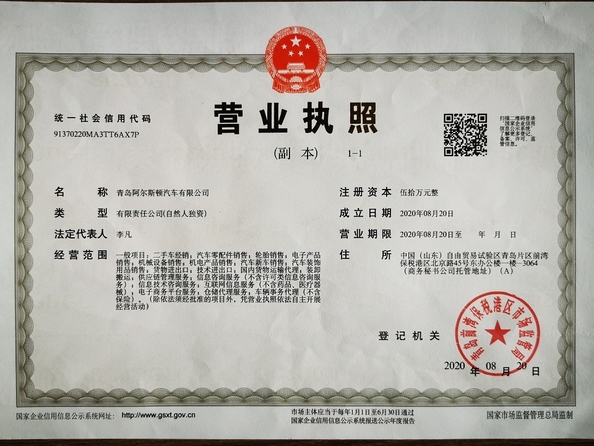
Alston Motors Editorial Team is the content team of Qingdao Alston Motors Co., Ltd. The team publishes practical information about refurbished HOWO trucks, semi trailers, vehicle inspection, refurbishment standards, export preparation, spare parts support, and commercial vehicle sourcing for Africa and other international markets.
Its content draws on the company’s experience in vehicle selection, technical inspection, refurbishment coordination, export documentation, shipping support, and after-sales service for overseas buyers.

 Your message must be between 20-3,000 characters!
 English