What Quality Standards Should You Inspect When Buying a Fuel Tank Semi Trailer?
When buying a fuel tank semi trailer for fuel logistics, buyers should inspect tank shell thickness, welding quality, compartment layout, anti-wave baffles, emergency valves, API couplers, axle rating, braking system, leak-test records, and refurbishment quality. These checks help reduce leakage risk, improve road safety, and avoid unsuitable trailers for cross-border fuel distribution.
1. Tank Shell Material: Comparing 5mm High-Strength Carbon Steel and Lightweight Aluminum Alloy
Tank shell material directly affects payload, durability, repair cost, and long-term operating value. For many African, Middle Eastern, and developing-market fuel transport routes, 5mm Q345B carbon steel remains a practical choice because it offers strong impact resistance on rough roads, construction access roads, mining routes, and regional distribution corridors.
Aluminum alloy fuel tank trailers are lighter and can improve payload efficiency where road conditions are good and maintenance facilities are available. However, aluminum usually requires a higher initial budget and more careful repair handling. For operators working on mixed paved and unpaved routes, carbon steel is often easier to repair and more familiar to local workshops.
Buyers should not judge quality by paint condition alone. A proper inspection should include ultrasonic thickness checks at the lower shell, weld zones, compartment edges, and areas near suspension mounting points. If the shell plate is thinner than the agreed specification, the trailer may have reduced service life or higher leakage risk.
2. Welding Integrity and Non-Destructive Testing: Ensuring 100% X-Ray Crack Detection Standards
Welding quality is one of the most important safety standards for a fuel tank semi trailer. Longitudinal seams, circular seams, T-joints, manhole areas, baffle welds, and tank-to-chassis mounting points should be checked carefully because these areas carry vibration, liquid surge, and road impact during daily operation.
The phrase “100% X-ray detection” should be understood as a strict inspection requirement for key pressure-retaining welds or buyer-specified weld areas, not as a casual marketing claim. Depending on the factory process and destination-market requirements, inspection records may include X-ray testing, ultrasonic testing, dye-penetrant testing, or air-tightness test reports.
When evaluating a used fuel tank semi trailer for fuel logistics, ask for weld inspection photos, close-up videos, and test certificates where available. Uneven weld beads, ground-down seams, fresh repair patches, oil stains around weld lines, or rust near old cracks should be treated as warning signs before payment or shipment.
3. Compartment Design and Anti-Wave Baffles: Stabilizing Liquid Surge With 4mm Wave-Breaker Plates
A good compartment design helps control liquid surge and improves fuel delivery flexibility. For 40,000L to 50,000L fuel tank semi trailers, buyers commonly choose 3 to 6 compartments depending on delivery routes, fuel types, and gas station unloading requirements.
Anti-wave baffles are equally important. When the trailer brakes, turns, or travels on uneven roads, the fuel inside the tank moves forward, backward, and sideways. Properly installed 4mm wave-breaker plates help reduce liquid impact, support driving stability, and reduce long-term stress on the tank shell.
Fuel Tanker Component & Material Standards Checklist
| Component |
Common Quality Standard |
Inspection Method |
Buyer Risk If Ignored |
| Tank shell plate |
5mm Q345B carbon steel or confirmed aluminum alloy grade |
Ultrasonic thickness check |
Shell thinning, deformation, leakage |
| Anti-wave baffles |
4mm steel plates with reinforced edges |
Internal manhole inspection |
Liquid surge, braking instability |
| Compartments |
3–6 compartments for mixed delivery routes |
Layout drawing and manhole check |
Wrong fuel delivery plan |
| Emergency foot valve |
Pneumatic bottom shut-off valve |
Control box actuation test |
Slow shut-off during pipe damage |
| API couplers |
4-inch API-compatible discharge interface |
Fit and sealing test |
Terminal mismatch and discharge delay |
| Braking system |
Dual-line pneumatic brakes with ABS |
Road test and air pressure check |
Longer stopping distance |
Internal baffles should include properly sized access openings so technicians can inspect, clean, and maintain the interior. Thin partitions, weak welds, or poorly aligned baffles may reduce stability and shorten the tank’s working life.
4. Safety Valve Systems: Verifying Pneumatic Emergency Shut-Off and Vapor Recovery Standards
Safety valve systems should be inspected before any fuel tank semi trailer is accepted for shipment. The most important part is the bottom emergency shut-off valve, also called the foot valve, which is designed to close fuel flow at the tank base if external piping is damaged.
Buyers should test the pneumatic control system, emergency handle, air line, sealing condition, and valve response. A practical inspection includes activating the emergency cut-off switch, checking whether the valve closes smoothly, and confirming there is no air leakage around the control system.
Vapor recovery systems may be required by certain terminals, urban fuel distribution markets, or environmental regulations, especially for gasoline delivery. Not every destination market uses the same standard, so buyers should confirm local depot requirements before ordering. A practical fuel tanker semi trailer inspection checklist should include vapor recovery pipe layout, vent valve condition, and compatibility with the buyer’s loading system.
5. Loading and Discharge Configurations: Standardizing Fleet Operations With 4-Inch API Couplers
Loading and discharge configuration affects daily operating efficiency. Many modern fuel depots prefer bottom loading and standardized discharge interfaces because they help reduce spillage, improve sealing, and make fuel loading more controlled than older top-loading methods.
A 4-inch API-compatible coupler is a common choice for fuel tanker semi trailers used in fuel distribution. Buyers should inspect the discharge valve box, API adapter, dust cap, sealing gasket, pipe welding, emergency shut-off linkage, and whether the valve box is lockable and weather-resistant.
For export buyers, small differences in coupler type, hose connection, and valve position can cause unloading problems after arrival. Before shipment, confirm whether the trailer matches the buyer’s depot equipment, fuel station discharge hose, and local delivery practice. Standardized discharge systems may not guarantee faster unloading in every market, but they help reduce avoidable mismatch risks.
6. Axles and Braking Systems: Configuring 13-Ton or 16-Ton Axles with ABS Anti-Rollover Technology
A fully loaded fuel tank semi trailer has a higher center of gravity than many dry cargo trailers, so axle rating, suspension, tires, and braking performance must be checked together. For heavy-duty fuel logistics, tri-axle configurations with 13-ton or 16-ton axles are commonly selected according to payload and local road limits.
Fuwa and BPW-style axle systems are widely used in export markets because parts availability and workshop familiarity are important for long-term service. Buyers should check axle nameplates, hub condition, brake chambers, air tanks, leaf springs, suspension hangers, U-bolts, tire size, and tire load index before confirming the order.
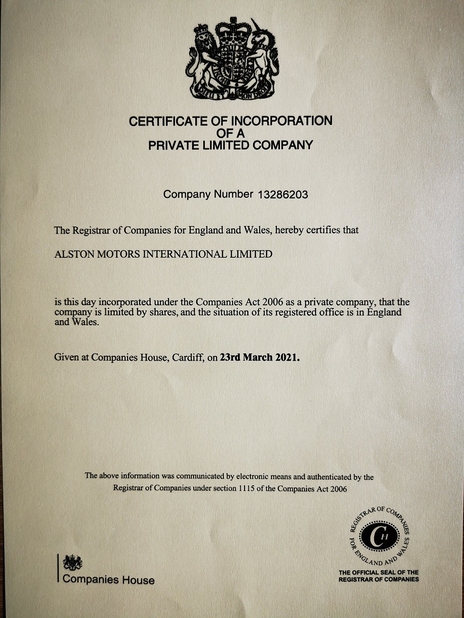
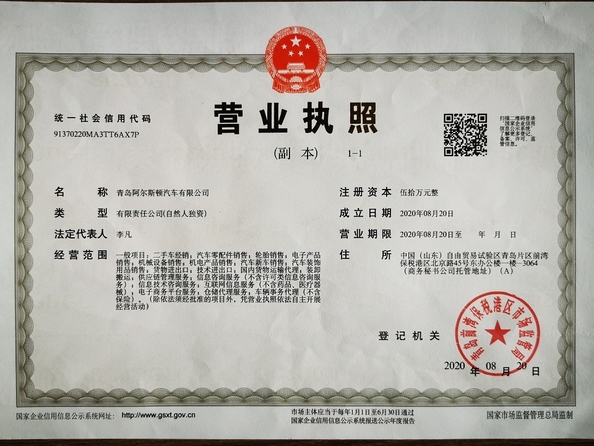
Qingdao Alston Motors helps overseas buyers verify tank shell thickness, compartment layout, anti-wave baffles, valve configuration, axle rating, braking system, leak-test records, loading photos, and export documents before fuel tank semi trailers are shipped. This inspection support helps buyers select trailers that match real fuel distribution routes instead of relying only on exterior repainting.
For buyers planning complete fleet purchases, semi trailer export solutions can help match fuel tank trailers with prime movers, spare parts, shipping method, destination port, and local operating requirements.
7. Regulatory Compliance and Leak Testing: Passing the Strict 36-kPa Air Tightness Test
Regulatory compliance should be checked before the trailer leaves the factory or refurbishment yard. Fuel tank semi trailers may be subject to destination-country transport rules, dangerous goods licensing, depot access requirements, axle-load limits, and customs inspection procedures.
Many atmospheric fuel tank trailers are checked through pneumatic air-tightness testing, and some factories use 36 kPa as a practical test pressure. Buyers should confirm the test pressure, pressure-holding time, pressure-drop record, inspector signature, test date, and whether each compartment was tested separately.
ADR-style dangerous goods checklists can be useful references for safety thinking, but final compliance must follow the destination country’s current rules. For cross-border African or Middle Eastern routes, the buyer should confirm tank registration, local inspection procedures, driver licensing requirements, and any fuel depot entry standards before dispatching the trailer into service.
8. Refurbishment and Paint Quality: Applying Polyurethane Marine Coatings for Long-Term Fleet ROI
Refurbishment quality affects both appearance and service life. A repainted fuel tank semi trailer may look new, but the buyer should confirm whether the surface was sandblasted, rust-treated, primed, repaired, and inspected before painting.
A stronger coating process may include sandblasting, zinc-rich primer, epoxy intermediate coating, and polyurethane topcoat. This type of coating is useful for trailers working near coastal ports, humid regions, fuel depots, construction sites, and dusty roads. The goal is not only appearance, but also corrosion control around the chassis, suspension brackets, tank supports, and valve box.
At Qingdao Alston Motors Co., Ltd, the export team can provide inspection photos, refurbishment details, loading photos, and configuration confirmation for fuel tank semi trailer buyers. Buyers can contact Qingdao Alston Motors fuel tanker trailer team with tank volume, compartment number, material preference, axle requirement, valve system, destination country, and discharge standard for a more accurate quotation.
Frequently Asked Questions
How often should the emergency shut-off valves be tested on a fuel trailer?
Emergency shut-off valves should be tested regularly according to local rules, depot requirements, and the fleet’s maintenance schedule. A practical routine is to test the pneumatic control, emergency handle, valve closing action, air line, and sealing condition before long-distance operation.
Can a carbon steel fuel tank semi trailer be used to transport aviation jet fuel?
A standard carbon steel fuel tank semi trailer is normally not recommended for aviation fuel unless the fuel owner, local authority, and technical specification clearly allow it. Aviation fuel has stricter cleanliness and contamination control requirements than ordinary diesel or petrol distribution.
Why are internal anti-wave baffles dished rather than completely flat?
Dished or reinforced baffles help distribute liquid impact more smoothly inside the tank. Compared with thin flat plates, properly shaped baffles can reduce localized stress, improve tank stability, and support safer braking and turning under loaded conditions.
What is the typical operational pressure limit for a standard fuel tank trailer?
Most fuel tank semi trailers for diesel and petrol distribution are atmospheric tanks, not high-pressure tanks. Air-tightness test pressure, such as 36 kPa in some factory procedures, should be confirmed through the test report, holding time, and compartment records.
Is air suspension better than mechanical leaf spring suspension for fuel tankers?
Air suspension can improve ride comfort and reduce vibration on good roads, while mechanical leaf spring suspension is often preferred for rough roads because it is simpler, stronger, and easier to repair in many developing markets. The better choice depends on route condition and maintenance support.
What parameters indicate that a used fuel tanker hull requires immediate retirement?
Serious shell thinning, visible deformation, repeated weld cracking, severe corrosion near the bottom plate, failed air-tightness testing, or unsafe repairs around structural zones may indicate that the tank should not continue fuel transport without professional assessment.
Written by: Alston Motors Editorial Team
Reviewed by: Export & Technical Team
Company: Qingdao Alston Motors Co., Ltd
About Alston Motors Editorial Team:
Alston Motors Editorial Team shares practical insights on refurbished HOWO trucks, semi trailers, commercial vehicles, used cars, and export solutions for Africa and other developing markets. The content is based on the company’s experience in vehicle inspection, refurbishment, export coordination, spare parts support, and customer service for overseas buyers.

 Your message must be between 20-3,000 characters!
 English