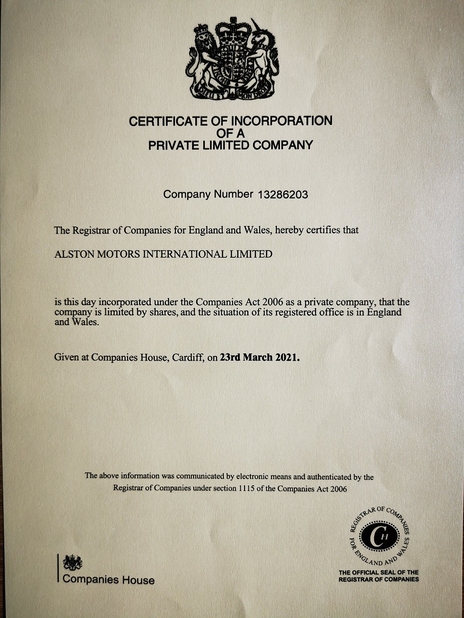
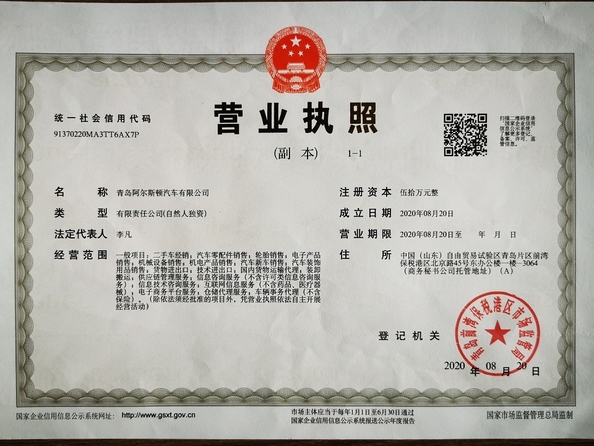
Every week, used HOWO dump trucks, tractor units, and mixer trucks leave Qingdao, Lianyungang, and Tianjin bound for Mombasa, Dar es Salaam, Tanga, Lagos, Tema, Beira, and Conakry. The process is not complicated, but it is specific. Each step has a real person behind it, a real document attached to it, and a real consequence if it is skipped. This is exactly how we do it — from the first message to the truck on the ground in Africa.
This is not a theoretical guide - it reflects actual weekly shipments handled by Qingdao Alston Motors Co., Ltd across multiple African markets, with real buyers, real documentation, and real delivery timelines.
How the Used Truck Export Process Works (Quick Overview)
- Inquiry and requirement matching
- Stock selection and compliance check
- Pre-sale inspection
- Export documentation (MOFCOM)
- Payment and reservation
- Shipping and vessel booking
- Destination clearance and registration
- After-sales support and parts availability
How do you export used trucks from China to Africa in 2026?
What documents are required to ship a used HOWO truck to Africa?
Each step is covered in full below.
Step 1 — Inquiry and Requirement Matching
It usually starts with a WhatsApp message or an email. The person on the other end is a fleet manager in Nairobi who just won a road construction tender and needs six dump trucks in 60 days. Or a transport contractor in Lagos replacing worn-out tractor heads on a port corridor contract. Or a returnee investor in Accra who wants to start a three-truck haulage business with a container haul contract already lined up. Or a Zambian mining logistics company scaling a Copperbelt fleet — the same profile that Qingdao Alston Motors Co., Ltd handles weekly across more than a dozen African markets.
The inquiry tells us what matters: country, intended use, budget range, timeline, and how many units. That information determines everything that follows — the specific model, the year range, the emission standard, the documentation path, and the shipping route.
Common starting points by use case:
We respond within 24 hours with a current stock list, photos, mileage records, and a confirmed FOB price. No unit is quoted without a physical assessment.
Step 2 — Stock Selection and Compliance Check
Not every used HOWO is the right HOWO for every destination. A Nigerian buyer importing through Apapa needs a unit that is 2011 model year or newer — Nigeria Customs Service enforces a 15-year age ceiling on commercial heavy trucks under HS 8704. A Kenyan contractor building a county road needs the same 6x4 dump truck spec that works on Kenyan laterite, not a highway-optimised flat-floor chassis. A Guinean bauxite operator running 30-tonne payloads on compacted red-dirt haul roads needs HC16 dual-reduction rear axles and a reinforced wide-body tipping body — not a standard 16m³ road-use bin.
We match the unit to three variables before presenting it to the buyer: destination country age and emission rules, intended operating environment, and total cost of ownership relative to available budget. A buyer who tells us they are importing to Tanzania and running the Dar es Salaam–Lusaka corridor gets a different recommendation than the same buyer importing to Zambia and working in a Copperbelt mine access road environment.
For buyers exploring West Africa destinations: used HOWO dump trucks for West Africa export. For East Africa haulage fleet buyers, see our used HOWO tractor trucks for East Africa. Road construction contractors in Nigeria, Kenya, and Zambia frequently also need used HOWO water trucks for road compaction work.
Step 3 — Pre-Sale Inspection
Before we ask a buyer to commit a single dollar, every unit goes through a documented inspection. This is not a visual walk-around. It is a structured assessment covering:
- Engine: Cold start video, oil condition check, idle smoke assessment, coolant leak inspection, injector response at load
- Gearbox: Shift-through across all forward and reverse gears — grinding, slipping, or delayed engagement disqualifies the unit
- Chassis and frame: Main rail inspection for cracks, bends, or unauthorised weld repairs — particularly around the rear bogie and fifth-wheel mount
- Axles and differentials: Hub seal condition, differential cover inspection for seepage, bearing noise under load rotation
- Hydraulic system (dump trucks and mixers): Full raise-and-lower cycle under load, cylinder seal condition, pump pressure at maximum extension
- Cab: Structural integrity, door seals, dashboard functions, no evidence of flood damage or collision repair affecting safety-critical structure
Units that fail any critical point are removed from the available list. Units that pass are photographed in full — engine bay open, cab interior, full exterior from all angles, chassis underside where accessible. Those photos go to the buyer before any deposit conversation.
For buyers who want additional assurance, we facilitate independent third-party pre-shipment inspection by accredited inspection agencies — SGS, Bureau Veritas, or equivalent. We do not obstruct third-party inspectors. A supplier who resists inspection is a supplier with something to hide.
Step 4 — Export Documentation (MOFCOM)
Since January 1, 2026, China's used vehicle export framework has been tightened under regulations from Ministry of Commerce of China, alongside the Ministry of Industry and Information Technology (MIIT), Ministry of Public Security (MPS), and General Administration of Customs (GACC). The core rule: any vehicle with fewer than 180 days of China registration at the time of export application must be accompanied by an After-Sales Service Confirmation Letter from the original manufacturer — specifying the destination country, vehicle details, and available overseas service network.
For genuinely used HOWO trucks with 180 or more days of documented operating history in China, this rule has no practical impact. All units we export carry full registration history. The documentation package we produce for every shipment includes:
- Original China vehicle registration certificate (行驶证)
- Deregistration confirmation from the originating province
- Export customs declaration (海关报关单)
- MOFCOM export licence (商务部出口许可证)
- Commercial invoice and packing list
- Engine and chassis number verification certificate
- Pre-shipment inspection report (where applicable)
Buyers who have been told by other suppliers that full MOFCOM documentation "is not necessary" or "can be arranged later" should treat that as a warning sign. Missing or falsified export documentation is the primary cause of shipment holds, port seizures, and customs disputes on the Africa side.
Step 5 — Payment and Reservation
Payment is by T/T (telegraphic transfer / bank wire). The standard structure is 30% deposit to confirm the unit and initiate export documentation, with the balance due before the vessel sails. For multi-unit fleet orders of five units or more, we discuss adjusted schedules based on the shipment size and the buyer's clearance timeline.
We do not accept letters of credit from banks in markets where LC processing delays exceed vessel departure windows — which in practice means most West and East African markets. T/T is faster, traceable, and protects both parties when combined with complete documentation and inspection records.
Once the deposit is confirmed, the unit is reserved — taken off the available list — and export documentation preparation begins immediately. Typical time from deposit to vessel loading is 5–10 business days, depending on the destination country's documentation requirements.
Step 6 — Shipping and Vessel Booking
The shipping method depends on the unit type, the quantity, and the destination port's handling capability.
RORO (Roll-On Roll-Off) is the standard for individual tractor units, standard dump trucks, and mixer trucks. The truck drives onto the vessel under its own power or is towed to the car deck. No lashing to a container frame, no risk of transit damage from inadequate securing. RORO is faster to load and discharge and is the preferred method for most African port destinations.
Flat-rack container is used for units with non-standard heights, wide-body mining dump bodies, or where RORO vessel schedules to the destination port are infrequent. Nigeria's Apapa and Tin Can Island ports handle flat-rack well. Some East African ports have better RORO frequency — Mombasa and Dar es Salaam both receive regular RORO calls from China.
Open-top container is occasionally used for smaller units or when consolidating multiple units in a single booking to reduce per-unit freight cost.
Bulk carrier is used for very large fleet shipments — typically 20 units or more — where neither RORO vessel capacity nor container availability is sufficient or cost-effective. Bulk carrier bookings require coordination with a specialist freight forwarder and advance planning of 3–5 weeks. The trucks are secured on the open cargo deck using purpose-built lashing arrangements and driven off at the destination port via the vessel's own ramp or shore-based equipment. For mining operators, construction companies, or equipment traders taking delivery of a complete fleet in a single shipment, bulk carrier is often the lowest per-unit freight cost available on China-to-Africa routes.
Transit times from Qingdao or Tianjin to main African ports in 2026:
- Mombasa, Kenya: 18–25 days
- Dar es Salaam, Tanzania: 20–28 days
- Apapa (Lagos), Nigeria: 25–35 days
- Tema Port, Ghana: 28–35 days
- Port Autonome de Conakry, Guinea: 28–38 days
- Beira, Mozambique: 22–30 days
- Port of Durban, South Africa: 20–28 days
We provide the buyer with the bill of lading, vessel name, voyage number, estimated time of arrival (ETA), and container or RORO booking reference as soon as the vessel sails. That document package is what the buyer's clearing agent in Africa needs to begin pre-arrival customs preparation.
Step 7 — Destination Clearance and Registration
This is where the buyer's local clearing agent takes over — but the quality of the China-side documentation determines how smoothly it goes.
Every African country has its own import rules for used commercial trucks. Key examples in 2026:
- Nigeria: A 15-year age ceiling applies to heavy commercial trucks under HS 8704 (oldest eligible unit in 2026: 2011 model year), as enforced by the Nigeria Customs Service. All units must be left-hand drive. Nigeria Customs Service (NCS) inspection at Apapa or Tin Can Island is mandatory. Qingdao Alston Motors Co., Ltd provides full NCS-compatible documentation packages for Nigerian buyers.
- Kenya: Kenya Revenue Authority (KRA) applies the KEBS import standards inspection. Used trucks must meet roadworthiness standards. Age limit guidance varies by axle configuration — buyers should confirm with a licensed Mombasa clearing agent.
- Tanzania: Tanzania Revenue Authority (TRA) clearance at DSM port. Tanzania's 2026 fuel price environment (diesel at Sh3,806/litre following the global oil supply disruption) makes engine fuel efficiency documentation a useful selling point at the point of customs valuation.
- Ghana: CEPS (Customs Excise and Preventive Service) clearance at Tema Port. Ghana's local content rules for mining haulage mean Ghanaian-owned transport companies are the primary buyers — age and documentation standards apply accordingly.
- Zambia: Zambia Revenue Authority (ZRA) clearance. Landlocked routing either through Dar es Salaam (TAZARA road corridor to Ndola) or Durban (north–south road through Zimbabwe). Confirm routing before booking freight.
We brief every buyer on the destination-specific requirements before the vessel sails. Surprises at the African port almost always trace back to incomplete China-side documentation or a mismatch between the declared vehicle details and the physical unit. We eliminate both risks at Step 3 and Step 4.
Step 8 — After-Sales Support and Parts Availability
Once the truck is cleared, registered, and operational, the relationship does not end. Buyers running HOWO trucks in Africa — whether in Nairobi's industrial belt, on Zambia's Copperbelt mine access roads, or pulling containers out of Tema Port — benefit from the HOWO platform's most important feature in the African context: parts availability.
HOWO WD615 and MC11 engine parts, gearbox components (HW19710 series), axle assemblies, hydraulic seals, and cab consumables are stocked by parts dealers in every major African logistics hub. Lagos, Accra, Nairobi, Dar es Salaam, Lusaka, and Conakry all have established HOWO parts supply networks. A breakdown on the Nairobi–Mombasa corridor or the Dar es Salaam–Lusaka run does not mean a three-week wait for a container from China. It means a phone call to the local parts dealer and a repair in hours or days. This parts ecosystem is one reason operators across Kenya specifically continue to prioritise used HOWO 420HP tractor trucks for Kenya long-haul work, and why construction contractors in Nigeria keep returning for used HOWO 6x4 dump trucks for Nigeria road projects.
That parts ecosystem is the reason fleet operators across Africa keep choosing HOWO — not because it is the cheapest truck in the world (it is not), but because it is the most repairable truck at scale in African operating conditions.
Start Your Import — Contact Us
If you are a fleet operator, logistics contractor, mining company, or equipment trader sourcing used trucks from China for Africa in 2026, the process above is exactly what you will go through with us. Every step is documented. Every unit is verified. Every shipment has full MOFCOM-compliant export documentation.
Tell us your destination country, intended use, budget, and quantity. We respond within 24 hours.
Email: bruce@alstonmotors.com
WhatsApp: +86 18315424206
Browse our current export inventory: used HOWO dump trucks for Africa | used HOWO tractor trucks for Africa | used HOWO mixer trucks

 Your message must be between 20-3,000 characters!
 English