UsedHowoTrucks.com — April 28, 2026
Table of Contents
Overview
On April 26, 2026 — two days ago — President William Ruto announced that the 169-kilometre Makutano–Meru highway will be upgraded to a dual carriageway, financed through Kenya's newly established National Infrastructure Fund (NIF). The announcement, made during a church gathering in Tharaka Nithi County, confirmed the NIF as an active deployment vehicle and named the Makutano–Meru corridor as one of the first projects to draw from it. For road contractors, equipment dealers, and fleet operators active in Kenya's construction sector, the announcement is a direct procurement signal: a major bituminous highway project across four counties is moving from planning into funded execution. Used HOWO dump trucks, water trucks, and mixer trucks are the core equipment on every comparable project currently active in Kenya.
The April 26 Announcement: What Ruto Said
Speaking in Tharaka Nithi County on Sunday, April 26, President Ruto stated: "We already have the National Infrastructure Fund. All those things you have asked me to do. Dual carriageway from Makutano to Meru, now we have the facility that will get us to do the dual carriageway." (Source: Kenyans.co.ke, April 26, 2026)
The 169-kilometre corridor runs through Kirinyaga, Embu, Tharaka Nithi, and Meru counties, connecting one of Kenya's most productive agricultural zones to Nairobi. It currently operates as a single carriageway and carries heavy daily mixed traffic including agricultural produce trucks, intercounty buses, and construction vehicles. The upgrade to dual carriageway standard involves full earthworks, base and sub-base compaction, drainage installation, asphalt paving, bridge reinforcement, and interchange construction — all activities that require sustained heavy equipment fleets over a multi-year build timeline.
The Nithi Bridge, a notoriously dangerous crossing on the same corridor, was specifically mentioned by the President as already funded for intervention. Bridge works of this kind are concrete-intensive and require used HOWO concrete mixer trucks and used HOWO dump trucks for formwork aggregate and pour logistics.
The National Infrastructure Fund: How It Changes Kenya Road Procurement
The National Infrastructure Fund was established as a domestic financing vehicle to reduce Kenya's dependence on external debt for large-scale infrastructure development. Its initial capitalisation received a direct injection of over Ksh103 billion following the government's sale of the Kenya Pipeline Company — proceeds deposited directly into the fund account. President Ruto has stated NIF targets raising Ksh5 trillion over the next decade.
This funding model matters for contractors. Unlike projects dependent on multilateral loan disbursements with complex approval chains, NIF-funded projects are designed to proceed on domestic fiscal timelines. Procurement and contractor mobilisation can advance faster once detailed designs and bill of quantities are finalised. The Makutano–Meru road is the second project confirmed under NIF, after announced upgrades at Jomo Kenyatta International Airport.
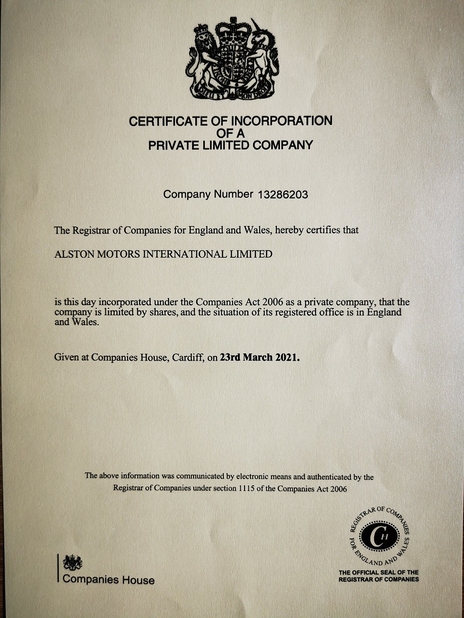
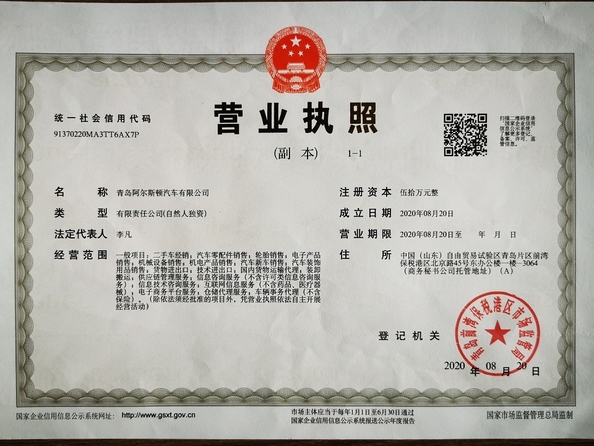
Qingdao Alston Motors Co., Ltd, which exports used HOWO trucks for sale in Kenya directly to Kenyan construction contractors, notes that project timelines on domestically funded road contracts tend to generate earlier equipment procurement inquiries, as contractors must mobilise quickly once awarded. Buyers who source trucks in advance of tender award are better positioned than those who wait for the letter of award.
What This Means for HOWO Truck Demand on Site
A dual carriageway upgrade of 169 kilometres is a sustained multi-year construction programme. Based on comparable active projects on Kenya's road network — including the Kenol–Sagana–Marua dual carriageway and the Rironi–Mau Summit Expressway — projects of this scale typically require between 20 and 60 heavy construction vehicles operating simultaneously across multiple sections.
The specific work packages that drive equipment demand on this corridor include: bulk earthworks for carriageway widening and median formation; gravel and crushed stone haulage from quarries to active road sections; water supply for soil compaction and dust suppression; concrete works at bridges, culverts, and interchanges; and asphalt mix transport from batching plant to paving crew. Each of these tasks maps directly to a specific HOWO configuration.
For earthworks and quarry haulage, used HOWO 6x4 dump trucks in the 16–20 cubic metre range are the standard choice on Kenyan road sites. The 371HP engine rating with the HW19710 transmission handles Kenya's mix of compacted gravel access roads and bitumen trunk sections without adaptation. For soil compaction and dust control across 169 kilometres of active earthworks, used HOWO water trucks in 10,000–15,000 litre configurations are deployed in direct proportion to active paving length.
Matching the Right HOWO Configuration to Kenyan Road Projects
Kenya's National Construction Authority and major road contractors have established clear preferences for equipment specifications on national highway projects. For the Makutano–Meru corridor, four configurations are most relevant.
Dump trucks for earthworks: The used HOWO 6x4 dump truck in 371HP with a 16–20 cubic metre steel tipper body is the dominant platform. It balances payload capacity with the ground clearance needed on unpaved construction access roads in Kirinyaga and Embu terrain. Contractors typically deploy 6–12 units per active section.
Water bowsers for compaction: Used HOWO water trucks in the 10,000–12,000 litre range with rear spray bar and side jets are deployed during sub-base and base layer compaction. On a 169-kilometre project, multiple sections advance simultaneously, requiring 4–8 water bowsers in continuous operation.
Concrete mixer trucks for structures: Bridge abutments, box culverts, and interchange foundations on the Makutano–Meru road require ready-mix supply. Used HOWO concrete mixer trucks in 6x4 configuration with 8–10 cubic metre drum capacity are the standard platform on KeNHA-funded projects.
Tractor units for plant mobilisation: When new sections open or equipment must be repositioned across the corridor, used HOWO tractor trucks pulling lowbed semi-trailers handle excavator and grader movements between sections. The 420HP rating provides adequate tractive effort for fully loaded lowbed combinations on Kenya's gradient-heavy inland roads.
Kenya's Broader Road Pipeline: A Pattern of Demand
The Makutano–Meru announcement does not stand alone. It is part of a visible pattern of funded road procurement that Qingdao Alston Motors Co., Ltd has been tracking across Kenya's construction sector in 2026. The Rironi–Mau Summit Expressway (175 kilometres), the Nairobi–Mombasa Usahihi Expressway (440 kilometres), the Voi–Taveta Metre Gauge Railway road-based support contracts, and ongoing KeNHA rehabilitation programmes across 23 counties are all at various stages of contractor mobilisation.
The pattern is consistent: Kenya's government is deploying capital at scale on road infrastructure, and the equipment fleets executing those contracts are dominated by used HOWO trucks in Kenya. The reasons are well established: HOWO spare parts are available from dealers in Nairobi's Industrial Area and Mombasa's Changamwe district; local mechanics trained on the WD615 and MC11 engine platforms are widely available; and the acquisition price of a used HOWO unit is 40–60% lower than a comparable new European or Japanese truck.
Fleet operators from other African countries — including Uganda, Tanzania, and Ethiopia — tracking Kenya's infrastructure investment cycle as a regional demand indicator will find the Makutano–Meru announcement consistent with the broader acceleration under NIF.
Sourcing Guidance for Kenyan Contractors
Kenya does not impose a formal vehicle age ceiling on commercial trucks equivalent to Nigeria's 15-year rule, but Kenya Revenue Authority applies higher import duty to older units, and KeNHA project specifications frequently require contractors to demonstrate equipment that meets minimum condition standards. Targeting model years 2015 and newer for all used HOWO dump trucks and mixer trucks on NIF-funded road contracts is prudent.
Kenya is a left-hand traffic country. All HOWO trucks exported to Kenya must be right-hand drive (RHD) configuration, which all HOWO units manufactured for African markets are by default.
Primary port of entry for used trucks destined for upcountry Kenyan road projects is Mombasa Port, with road transport to Nairobi taking 8–10 hours on the A109. For projects in Kirinyaga, Embu, and Meru — the counties directly on the Makutano–Meru corridor — Mombasa clearance followed by direct delivery to site is standard. Shipping time from Qingdao or Tianjin to Mombasa is approximately 22–30 days on direct services.
China's 2026 MOFCOM export compliance framework requires that any used vehicle registered in China for fewer than 180 days must carry an After-Sales Service Confirmation Letter from the original manufacturer before export approval is granted. For genuinely used HOWO trucks with documented operating history, this requirement has no practical effect. Buyers should confirm compliance documentation is in order before committing to payment.
Sources

 Your message must be between 20-3,000 characters!
 English