UsedHowoTrucks.com — April 28, 2026
Table of Contents
Overview
On April 28, 2026, Tanzania's government signed a $1.277 billion syndicated financing agreement in Dodoma to fund two critical sections of its Standard Gauge Railway (SGR) — Lots 3 and 4, running from Makutupora in Singida Region to Isaka in Shinyanga Region. The deal is part of a broader $2.33 billion financing package arranged by Standard Chartered Bank and backed by export credit agencies from Italy, Sweden, and Poland.
For construction contractors, logistics operators, and fleet owners active in Tanzania's central and western regions, the signing marks the start of a major procurement and mobilisation cycle. All pre-construction earthworks, access road construction, camp logistics, aggregate haulage, and concrete delivery will run on road-based heavy equipment — and used HOWO dump trucks and used HOWO tractor trucks are the dominant platform on Tanzania's construction corridors.
The $1.28 Billion Financing Agreement
Tanzania's Permanent Secretary of Finance, Dr. Natu El-Maamry Mwamba, signed on behalf of the government, while Herman Kasekende, CEO of Standard Chartered Bank Tanzania, signed for the financing consortium. Minister of Finance Khamis Omar confirmed the funds form part of the broader $2.33 billion package, coordinated through export credit agencies from Italy, Sweden, and Poland. (Source: The Citizen, April 28, 2026)
Turkey's Yapi Merkezi — which has already constructed SGR Lots 1 and 2 — and China Civil Engineering Construction Corporation (CCECC) will undertake the works. Both contractors have established supply chains and subcontractor networks in Tanzania. Civil works of this scale generate immediate, sustained demand for on-site heavy haulage, bulk material delivery, concrete production, and fuel logistics across the full corridor.
Minister of Transport Makame Mbarawa stated that once completed, this section will give the SGR the capacity to carry up to 5 million tonnes of cargo annually and significantly cut transit times across Tanzania's interior. The SGR has already transported nearly 6 million passengers and 120,000 tonnes of cargo on its operational Dar es Salaam–Dodoma segment since launch in mid-2024, demonstrating real freight volumes that road operators must currently absorb. (Source: Xinhua, April 29, 2026)
SGR Lots 3 and 4: The Makutupora–Isaka Corridor
Lot 3 covers the Makutupora–Tabora section, approximately 294 kilometres of new rail running through central Tanzania's semi-arid interior. Lot 4 extends a further 130 kilometres from Tabora to Isaka in Shinyanga Region. Together, these two sections bridge a critical gap between the operational Dar es Salaam–Dodoma segment and the Isaka–Mwanza section already 63% complete with freight trials underway.
Isaka is a key logistics hub. It is the departure point for the planned Isaka–Kigali Standard Gauge Railway linking Tanzania to Rwanda, and it serves as the railhead for goods destined for landlocked Burundi, Uganda, and the Democratic Republic of Congo. The completion of Lots 3 and 4 therefore unlocks not just Tanzanian domestic freight but the entire Central Corridor trade route to East and Central Africa.
Tanzania is simultaneously building SGR sections toward Kigoma, Uvinza, Mwanza, and — through a separate $2.15 billion contract signed in January 2025 — into Burundi to connect the Musongati nickel mining district to Dar es Salaam Port. The total planned SGR network now exceeds 2,500 kilometres. Every section under active construction generates demand for road-based construction haulage that runs ahead of and alongside rail works.
What This Means for Used HOWO Truck Demand in Tanzania
Financing agreements of this scale trigger procurement activity immediately. Engineering, Procurement, and Construction (EPC) contractors mobilise equipment the moment contracts are awarded — often before ground is broken. For Lots 3 and 4, mobilisation covers more than 420 kilometres of corridor across central Tanzania, passing through terrain that ranges from open plains to elevated escarpment. Access roads, surveying tracks, equipment staging areas, and camp sites all require earthworks before a single metre of rail is laid.
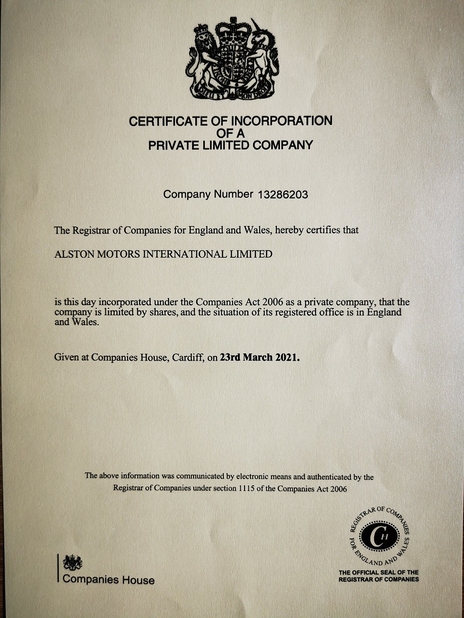
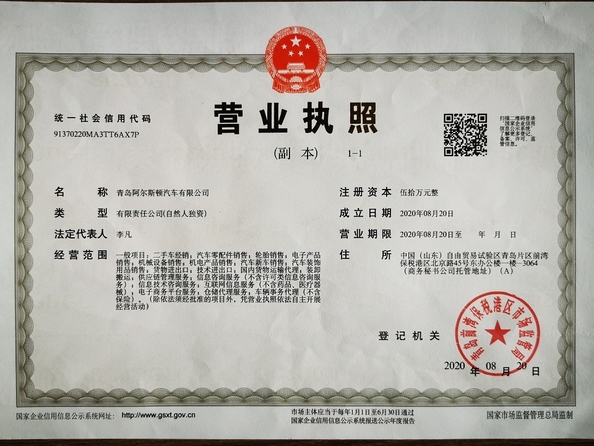
Qingdao Alston Motors Co., Ltd, a China-based exporter of verified used HOWO trucks to African markets, supplies units across the full configuration range required for SGR-type civil works — 6x4 and 8x4 dump trucks, tractor heads for flatbed logistics, and mixer trucks for concrete-intensive bridge and culvert works — with full MOFCOM-compliant export documentation and stock matched to Tanzania's import requirements.
Used HOWO trucks in Tanzania are already embedded across the country's active SGR construction zones. HOWO's parent company Sinotruk holds dominant market share in East Africa, with parts availability across Dar es Salaam, Morogoro, Dodoma, and Tabora. For a contractor working 250 kilometres from the nearest city, parts network depth is the controlling variable on downtime cost — and HOWO wins that comparison across Tanzania's central corridor.
Operators sourcing equipment for Tanzania's SGR Lot 3 and Lot 4 corridor should also review used HOWO trucks for Kenya and used HOWO trucks for Zambia for cross-border fleet planning, as the Central Corridor carries freight from all three countries to Dar es Salaam Port.
Equipment Required: Configurations and Phases
Phase 1 — Access road construction and site clearance: The first equipment deployed on any large rail project is the earthmoving fleet. Grading access tracks, clearing bush, cutting embankments, and compacting roadbeds requires used HOWO 6x4 dump trucks for aggregate and spoil haulage, typically 371HP specification. The 18–20 cubic metre tipping body is the standard configuration on Tanzanian construction sites.
Phase 2 — Bulk materials and aggregate haulage: Once earthworks begin in earnest, the material volumes become large. Rail construction consumes significant quantities of ballast stone, crushed aggregate, and fill material. Used HOWO 8x4 dump trucks rated at 371HP to 420HP are preferred for high-payload quarry runs where gross vehicle mass regulations allow. Tanzania's TANROADS maintains axle-load enforcement on national roads, so payload configuration matters.
Phase 3 — Concrete delivery for bridges and culverts: The Makutupora–Isaka corridor crosses numerous seasonal watercourses requiring concrete bridges and box culverts. Used HOWO concrete mixer trucks, typically 8x4 chassis with 12–16 cubic metre drums, are the standard equipment for on-site concrete delivery at these distances from batching facilities.
Phase 4 — Camp and fuel logistics: Remote rail construction at 200–400 kilometres from the nearest supply hub requires dedicated fuel tanker support and general cargo logistics. Used HOWO fuel tanker trucks supplying diesel to on-site generators, plant machinery, and vehicle fleets are deployed from day one of camp establishment. Flatbed used HOWO tractor trucks handle containerised equipment and oversized loads from Dar es Salaam Port to the interior staging areas.
Sourcing and Importing Used HOWO Trucks into Tanzania
Tanzania's primary import gateway for used Chinese commercial vehicles is the Port of Dar es Salaam. Transit times from Qingdao, Lianyungang, or Tianjin to Dar es Salaam typically run 35–50 days, with customs clearance adding 7–14 days depending on documentation completeness. Operators targeting the SGR Lot 3 and 4 mobilisation window should begin procurement now — EPC contract awards are expected mid-2026, with site mobilisation following closely.
China's January 2026 MOFCOM export regulations require all used vehicles exported from China to carry full registration history and, where the vehicle has fewer than 180 days of Chinese registration, an After-Sales Service Confirmation Letter from the original manufacturer. For genuine used HOWO trucks with operating history, this requirement poses no obstacle. Qingdao Alston Motors Co., Ltd produces full MOFCOM-compliant documentation for every shipment to Tanzania, including original registration certificates, deregistration confirmation, and export licensing.
Tanzania has no enforced vehicle age ceiling for commercial trucks equivalent to Nigeria's 15-year rule, but import duty and VAT apply at standard rates. Buyers should work with a licensed clearing agent at Dar es Salaam Port and verify that all export documentation matches the vehicle's chassis and engine numbers before the vessel sails. Disputes on document mismatches are the primary cause of customs delays on the Tanzania side.
Buyers sourcing used HOWO 371HP tractor trucks or used HOWO 400HP tractor trucks for long-haul logistics on Tanzania's Central Corridor should specify right-hand drive (RHD) units. For construction dump and mixer configurations targeting the SGR lots, the 2015–2020 model year range offers the best balance of frame integrity, low fuel consumption, and immediate exportability under China's 180-day rule.
Sources

 Your message must be between 20-3,000 characters!
 English