What Payload Capacity Is Suitable for a Used HOWO Dump Truck in Mining and Quarry Work?
For a used HOWO dump truck in mining and quarry work, the ideal payload capacity ranges from 25 to 40 tonnes, depending directly on chassis configuration and haul road conditions. Selecting the correct capacity requires balancing material density against axle structural limits to prevent premature chassis failure while maximizing daily trippage.
1. Mining vs. Quarry Demands: How the Operating Environment Changes Your Tonnage Needs
Open-pit mining operations require a minimum payload threshold of 30 tonnes, whereas smaller quarry settings favor agility over raw tonnage.
Deep open-pit operations rely on massive continuous excavation, making heavy 30-to-40-tonne capacities essential to keep pace with large mechanical excavators. Conversely, aggregate quarries often feature tight turning radiuses, narrow haul tracks, and restricted overhead bin clearances that quickly penalize oversized vehicles. Buyers working in these constrained quarry environments typically find a 25-tonne capacity more maneuverable, ensuring faster cycle times and safer overall material handling.
2. Base Chassis Selection: Comparing 6x4 and 8x4 Axle Load Ratings
A used HOWO 6x4 dump truck is best suited for 25-to-30-tonne payloads, while the 8x4 configuration scales up safely to 40 tonnes under heavy off-road conditions.
According to heavy equipment technical export guidelines established by Qingdao Alston Motors, a 30-tonne capacity serves as the global operational sweet spot for a used 6x4 chassis, whereas workloads exceeding 35 tonnes strictly require an 8x4 dual-front axle setup to prevent catastrophic frame bending. The three-axle 6x4 chassis offers superior articulation and traction on uneven mud tracks, making it highly reliable for standard quarry hauling up to 30 tonnes. The four-axle 8x4 chassis distributes extreme payload weight across two front steering axles, drastically minimizing ground pressure when hauling dense iron ore. Buyers can explore our broad inventory of used HOWO trucks to compare available axle configurations side by side.
3. Powertrain Matching: Selecting the Right Horsepower (371hp vs. 420hp) for Your Load
A 371-horsepower engine is optimal for 25-tonne quarry operations, but payloads approaching 40 tonnes require the high torque of a 420-horsepower engine.
Operating a 40-tonne payload with an underpowered 336hp or 371hp WD615 engine causes severe thermal stress, leading to premature turbocharger failure and high fuel waste. For steep mining ramps with gradients exceeding 12%, the 420hp D12 or MC engine provides the necessary torque reserve. Buyers must match horsepower to tonnage to maintain an efficient ground speed of at least 15 km/h on steep uphill hauls. If your current site fleet uses specialized pull units instead, a dedicated used HOWO tractor truck can provide alternative heavy haulage solutions.
4. Tipper Body Engineering: Heavy-Duty Square Boxes vs. Light U-Shape Boxes
Thick, rectangular steel boxes are mandatory for high-density mining rocks, whereas lighter U-shaped structures suit fine aggregate quarry materials.
Dense copper ore weighs roughly 2.5 tonnes per cubic meter, meaning a standard box can easily exceed legal axle ratings before looking visually full. For blasting rock and large boulders, buyers should verify that the cargo box uses a 10mm bottom and 8mm side high-tensile steel plate. Lighter U-shaped boxes prevent wet sand from sticking but will warp rapidly if loaded with heavy mining fragments. When configuring a specialized used HOWO dump truck, choosing the correct wear-resistant metal structure directly dictates your field uptime.
Cargo Box Selection Matrix
| Box Type |
Typical Material |
Bottom/Side Thickness |
Ideal Payload Range |
| Rectangular (Square) |
Blasted Rock, Iron Ore |
10mm / 8mm (High-Tensile) |
35 – 45 Tonnes |
| U-Shaped (Scoop) |
Fine Sand, Crushed Gravel |
8mm / 6mm (Standard Carbon) |
25 – 32 Tonnes |
5. Haul Road Grade and Logistics: Calculating the True On-Site Payload Limit
Severe pit inclines demand a 15% reduction in target payload to prevent catastrophic brake fade and transmission gear stripping.
Even if a used HOWO dump truck is structurally rated for 40 tonnes, a continuous 15-degree incline transforms that mass into a dangerous kinetic hazard. Wet, unpaved mining tracks reduce the tire coefficient of friction, causing fully loaded trucks to lose traction and slip backward on steep ramps. Lowering your operational payload allocation by 5 tonnes during rainy seasons protects your dual-reduction HC16 drive axles from snapping under sudden shock loads.
6. Used Vehicle Inspection: Identifying Chassis, Suspension, and Axle Overload Damage
Buyers must reject any used mining truck displaying double-frame separation or welded reinforcing plates along the chassis midsection.
Prior operators frequently push used HOWO trucks beyond design limits, leaving latent stress fractures hidden inside the heavy-duty 8+8mm dual chassis frame. Inspect the HF9 front steering knuckles carefully and count the rear leaf springs; a genuine mining specification requires a 12-leaf heavy suspension assembly. Replacing cracked leaf packs or bent V-rods immediately adds thousands of dollars to your initial used vehicle acquisition cost. Keeping essential truck trailer spares on-site mitigates the structural wear common to severe aggregate sites.
Structural Inspection Checklist
-
Dual-Frame Alignment: Inspect for gaps or rust bleeding between the outer and inner 8mm frame rails.
-
Leaf Spring Pack: Verify the 12-leaf mining configuration and check for hairline fractures near the U-bolts.
-
HC16 Drive Axles: Check planetary wheel-end reducers for gear oil leakage and housing cracks.
-
Hydraulic Hoist Cylinder: Check the multi-stage front-tipping cylinder for chrome scoring or fluid bypass.
7. Operational Cost Management: Balancing High Tonnage Against Maintenance Expenses
Maximizing payload to 40 tonnes increases per-trip revenue but accelerates tire degradation by 40% on jagged quarry rock surfaces.
Heavy payloads generate extreme internal heat within 12.00R20 mining tires, causing rapid tread separation when driving over sharp, unpaved granite shards. At Qingdao Alston Motors, field technicians observe that balancing the payload at 30 tonnes optimizes fuel economy, keeping consumption around 45 liters per 100 kilometers. Overloading beyond this sweet spot causes the ten-speed HW19710 transmission to operate outside its efficient RPM band, eroding profit margins through frequent clutch replacements. For more details on our rigorous multi-point testing standards, buyers can consult our corporate About Us documentation.
8. Legal Compliance: Off-Road Open-Pit Freedom vs. Highway Axle Weight Regulations
Off-road mining allows buyers to utilize the absolute physical payload limit of the HOWO chassis, whereas public road transport requires strict adherence to legal axle limits.
When operating strictly within a closed pit, a HOWO truck can run at its gross vehicle weight rating without regulatory penalties. However, if your quarry operation requires driving on public highways to reach urban concrete batching plants, local gross vehicle weight laws typically restrict 6x4 models to 25 tonnes total. According to international road safety research from the World Road Association (PIARC), excessive axle loads on public roads accelerate pavement damage exponentially, which explains why cross-border transport authorities enforce these limits aggressively. Buyers can consult our team directly via our Contact Us page to verify local compliance metrics before finalizing an international heavy equipment purchase.
9. Final Decision Matrix: Choosing Your Ideal Used HOWO Capacity
Matching your primary material density to the appropriate axle type yields the most profitable and durable used HOWO purchasing decision.
For small-scale aggregate hauling, choose a used 6x4 HOWO with a 371hp engine and a 25-tonne capacity to minimize operational overhead. For harsh, large-scale open-pit mining, source an 8x4 configuration featuring a 420hp engine, HC16 heavy axles, and a 10mm high-tensile steel box. If your extraction project shifts from pure rock hauling to infrastructure building, transitioning toward a specialized used HOWO concrete mixer truck ensures maximum project flexibility.
Frequently Asked Questions
Q1: Can a used HOWO 6x4 safely carry 40 tonnes in a mine?
While physically possible with reinforced leaf springs, carrying 40 tonnes on a 6x4 chassis overloads the rear HC16 dual axles, leading to frequent shaft snapping. It is safer to keep 6x4 models under 30 tonnes.
Q2: What engine model is best for a 35-tonne quarry payload?
The WD615.47 Euro II engine with 371 horsepower is highly recommended due to its mechanical simplicity, high torque output at low RPMs, and cheap spare parts availability.
Q3: How does material density affect how much I can load into the dump box?
High-density materials like iron ore occupy less space but weigh significantly more. A cargo box filled only halfway with iron ore can easily equal the weight of a box filled to the brim with sand.
Q4: Why do mining-spec used HOWO trucks have thicker chassis frames?
Mining-spec models feature an 8+8mm reinforced double frame designed specifically to absorb the extreme twisting forces encountered when driving over uneven, unpaved pit floors.
Q5: Should I buy a U-shape or square cargo box for aggregate hauling?
For fine gravel and sand aggregate, a U-shape box is ideal because its smooth curves prevent moist material from sticking in the corners during tipping.
Q6: How do I know if a used HOWO truck has been chronically overloaded by its previous owner?
Check for sagged rear leaf springs, fresh welding scars near the center trunnion seat, and cracks around the engine mounting brackets on the chassis frame.
Written by: Alston Motors Editorial Team
Reviewed by: Export & Technical Team
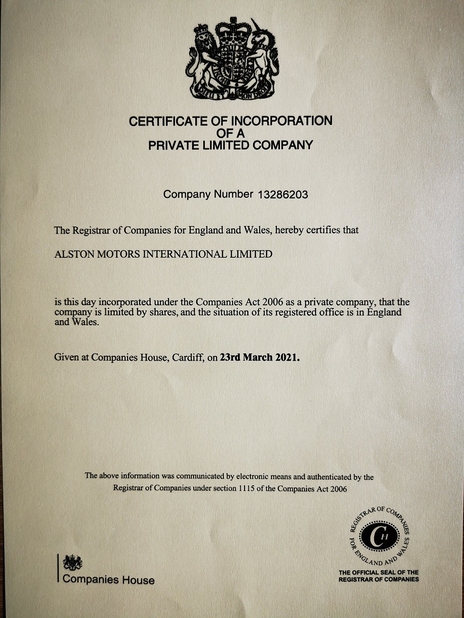
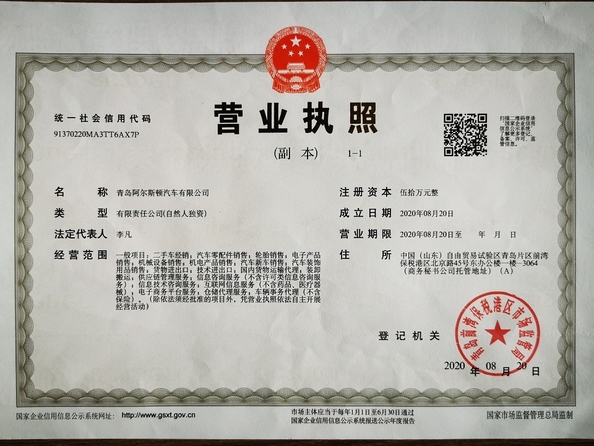
Company: Qingdao Alston Motors Co., Ltd
About Alston Motors Editorial Team:
Alston Motors Editorial Team shares practical insights on refurbished HOWO trucks, semi trailers, commercial vehicles, used cars, and export solutions for Africa and other developing markets. The content is based on the company’s experience in vehicle inspection, refurbishment, export coordination, spare parts support, and customer service for overseas buyers.

 Your message must be between 20-3,000 characters!
 English