UsedHowoTrucks.com — April 18, 2026
Table of Contents
The April 13 Announcement: What Happened
On April 13, 2026, Ghana's Minister of Roads and Highways, Kwame Governs Agbodza, confirmed that the government has paid all outstanding debts totalling $25 million owed to the contractor executing the Suame Interchange project in Kumasi. The minister made the disclosure during a courtesy call on the Asantehene, Otumfuo Osei Tutu II, at the Manhyia Palace. (Source: Graphic Online, April 13, 2026)
The payment clears certified works that had remained unpaid since 2024, after the project stalled when its domestic commercial loan funding was caught in Ghana's Domestic Debt Exchange Programme (DDEP) following the country's 2022 debt restructuring. The project has since been moved under the government's flagship "Big Push" infrastructure programme. Minister Agbodza stated that the contractor — a joint venture between Spain's Grupo Dizmar and Ghana's Rango Construction Ltd — is expected to be fully mobilised on site and working toward a completion target of end-2027.
The announcement came on the same day the minister briefed the Asantehene on preparations for the Accra–Kumasi Expressway, an even larger project that will require Ghana Armed Forces engineers to clear an 80-kilometre right-of-way through the Ashanti Region before ground-level construction can begin.
Suame Interchange: Project Scope and Background
The Suame Interchange is a critical component of Kumasi's urban road network. Located at the current Suame Roundabout — one of the busiest junctions in Ghana's second-largest city — the project originally called for a four-tier interchange with overpasses at the Abrepo, Krofrom, Anomangye, Magazine New Road, and Abusuakruwa junctions. The design has since been revised to a three-tier configuration to avoid extensive demolitions in the surrounding urban environment and save approximately GH¢100 million in additional costs.
The government has allocated an additional GH¢3 billion to fund completion of the revised three-tier structure alongside the surrounding outer ring road. Once complete, the interchange will be the first of its kind in the Ashanti Region and a central pillar of the wider Kumasi bypass and orbital road system now under parallel development. A 47-kilometre bypass section from Ejisu is already under active construction.
Residents of the Suame Magazine area — home to West Africa's largest vehicle repair and spare parts market — have been vocal about the disruption caused by stalled construction, including dust pollution and persistent traffic congestion. As of April 15, 2026, local media reported that community members remained cautiously skeptical despite the government's renewed assurances, placing pressure on contractors to remobilise quickly and visibly. (Source: Asaase Radio, April 15, 2026)
The Accra-Kumasi Expressway: The Larger Picture
The Suame debt clearance is not an isolated event. It is part of a broader construction reactivation across Ghana's road network in 2026. Minister Agbodza has confirmed that most road project contracts for 2026 have already been awarded, with the Ministry now focused on supervising contractors and enforcing quality standards rather than still processing tenders.
The Accra–Kumasi Expressway — a new high-speed route connecting Ghana's two largest cities, designed to complement and eventually reduce pressure on the existing dual carriageway — is moving from preparation into early works. Ghana Armed Forces engineers have been tasked with clearing an 80-kilometre right-of-way in the Ashanti Region within 20 weeks. That land clearance phase, which involves demolishing structures, removing vegetation, and grading the corridor, requires a sustained fleet of heavy earthmoving equipment on site from day one.
Separately, the Kasoa–Winneba coastal highway is targeted for completion by June 2026, and the Cape Coast–Takoradi road — described by the minister as a larger undertaking connecting two major regional capitals — is being executed by a dedicated contractor with a sub-2027 target. Each of these active projects requires a continuous supply of dump trucks, water trucks, and concrete mixer trucks throughout the build period.
Why Contractors Are Now Moving to Source Used HOWO Trucks
Contractor remobilisation after a payment stoppage always triggers a rapid equipment procurement cycle. Firms that stood down their fleets during the payment delay now need to rebuild site capacity quickly to meet revised completion schedules and avoid penalty clauses. The most practical sourcing channel for heavy construction equipment in Ghana is the used Chinese truck market, and HOWO — manufactured by Sinotruk — is the dominant platform across Ghanaian construction and mining sites.
Ghana's parts ecosystem strongly favours HOWO. Kumasi's Suame Magazine, the very district where the stalled interchange is located, is one of Africa's most comprehensive used vehicle parts markets. Engine components, gearboxes, axle parts, and cab fittings for the HOWO platform are stocked by dozens of dealers within the Magazine district itself. A contractor breaking down on or near the Suame site can source and fit replacement parts the same day. No European or Japanese heavy truck platform offers comparable local parts availability at Kumasi price points.
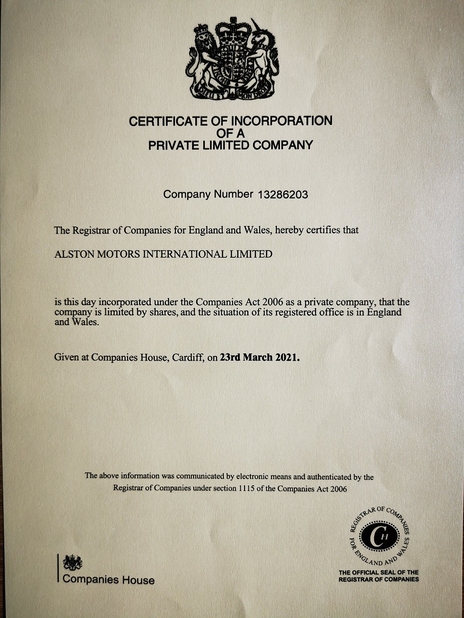
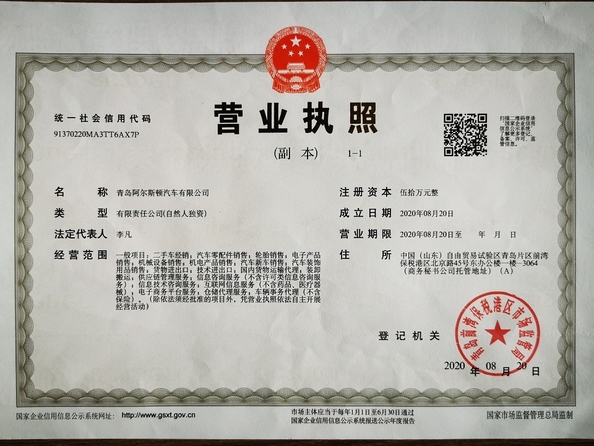
Qingdao Alston Motors Co., Ltd supplies used HOWO dump trucks and used HOWO tractor trucks in the model years and specifications most in demand by West African road contractors, including units from 2015 to 2020 with documented service history and full MOFCOM-compliant export paperwork for clearance at Tema Port.
Which Used HOWO Truck Models Fit This Work
Earthmoving and overburden removal: Interchange construction at Suame involves substantial excavation across multiple junction levels, pile cap removal, and urban soil movement in a confined site. The used HOWO 6x4 dump truck in the 20-cubic-metre body configuration is the standard choice for this type of work, offering the payload and manoeuvrability balance needed in congested urban sites. For higher-volume earthmoving on the Ejisu bypass and expressway right-of-way clearing, the used HOWO 8x4 dump truck provides increased load capacity within Ghana's legal axle weight limits.
Concrete delivery: Pile caps, bridge deck pours, and overpass beam seats all require ready-mixed concrete delivered continuously to an urban site. The used HOWO concrete mixer truck in 6x4 configuration — typically a 10–12 cubic metre drum — handles Kumasi's urban gradients and the stop-start delivery patterns dictated by site access constraints. The HOWO mixer platform's straightforward hydraulic drum drive is serviceable by Suame Magazine mechanics without specialist tools.
Dust suppression and compaction moisture: The Suame community's primary complaint has been dust. Compaction moisture and road surface dust suppression on the Ejisu bypass and expressway clearance corridor both require large-capacity water tankers. The used HOWO water truck in the 15,000–20,000 litre range is the practical solution for high-volume site suppression on long linear construction corridors.
Materials and aggregate haulage: Steel reinforcement, precast concrete elements, bridge beams, and aggregate supply from quarries to the interchange site all require reliable line-haul capacity. The used HOWO 6x4 tractor truck paired with a flatbed or tipper trailer handles these movements efficiently on the routes linking the Tema import corridor to Kumasi.
Sourcing Guidance for Ghanaian Buyers
China's January 2026 used vehicle export regulations require a minimum 180-day vehicle registration period before an export application can be filed. Ghanaian contractors remobilising now and targeting full site capacity by June or July 2026 should place orders immediately. Typical total lead time from order confirmation to Tema Port arrival is 60–90 days, accounting for pre-shipment inspection, shipping, and Ghanaian customs clearance.
Ghanaian customs applies import duty, VAT, and other levies to used commercial vehicles. Buyers should confirm current applicable HS code rates with a licensed clearing agent in Tema before finalising purchase budgets. Ghana's vehicle age limit for used commercial trucks should also be confirmed for the specific model year being procured, as the enforceable ceiling has tightened progressively and policy continues to evolve.
Qingdao Alston Motors Co., Ltd provides complete MOFCOM-compliant export documentation for all units, reducing the risk of clearance delays at Tema. For multi-unit orders, independent pre-shipment inspection in China is recommended to verify chassis condition, engine hours, tipping hydraulic integrity, and mileage accuracy before shipping costs are committed. Buyers should prioritise the following pages for current stock and pricing:
Sources

 Your message must be between 20-3,000 characters!
 English