UsedHowoTrucks.com — April 10, 2026
Nigeria is Africa's largest market for used HOWO trucks. Contractors, logistics operators, mining firms, and fleet owners import thousands of units through Apapa and Tin Can Island ports every year. The process involves two separate compliance tracks — one in China at the point of export and one in Nigeria at the point of clearance — and 2026 has introduced significant changes to both. This guide covers every stage: sourcing, Chinese export rules, shipping, Nigerian duties, port clearance, and on-road registration.
Table of Contents
Step 1 — Confirm Your Truck Is Eligible for Import
Vehicle Age Limit
Nigeria restricts the import of used vehicles based on age. The rule has tightened progressively since 2013. As of 2026, the enforceable ceiling for most used commercial vehicles sits at 15 years from the year of manufacture for heavy trucks under HS Code 8704 (motor vehicles for the transport of goods). This means that in 2026, the oldest eligible HOWO tractor truck or dump truck you can legally import is a 2011 model. Attempting to import older units risks seizure, punitive penalties, and loss at Nigeria Customs Service (NCS) auctions.
Note that the age limit for passenger cars (HS 8703) is stricter — currently around 10 to 12 years — and is not directly applicable to commercial heavy trucks. However, you should always confirm the current applicable limit for your specific HS code directly with the NCS or a licensed clearing agent before purchasing, as policy has shifted multiple times in recent years.
For used HOWO trucks, focus on 2014 and newer models to stay comfortably within limits regardless of any policy tightening before your shipment arrives.
Left-Hand Drive Requirement
All vehicles imported into Nigeria must be left-hand drive (LHD). HOWO trucks manufactured for export to Africa are universally LHD. Confirm this explicitly if sourcing through a third-party broker.
Eligible Truck Types
The following used HOWO truck types are routinely cleared at Nigerian ports:
Step 2 — Source and Inspect the Right Unit
Where to Source
The primary sourcing markets for used HOWO trucks destined for Nigeria are China (Shandong, Hebei, and Guangdong provinces), Japan, and the United States. China is by far the dominant source, offering the widest model selection and the most competitive pricing. Japan and the US supply a smaller secondary volume of right-hand drive and left-hand drive units respectively.
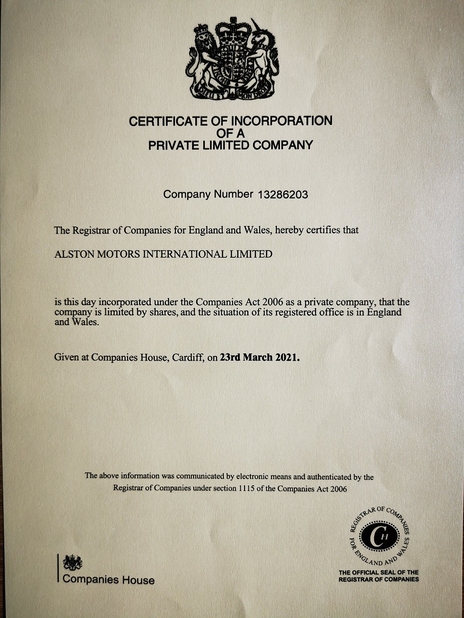
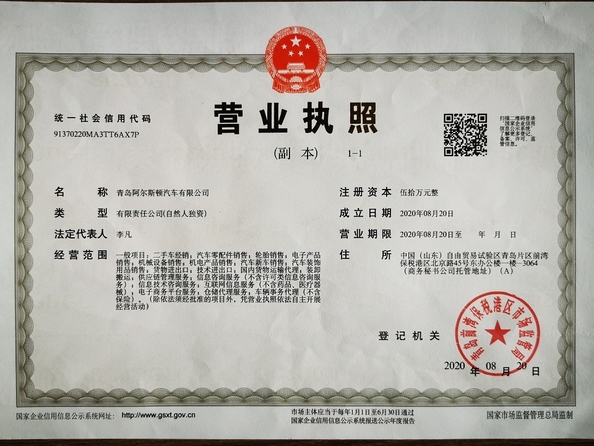
When sourcing from China, work only with exporters who can demonstrate compliance with the 2026 MOFCOM export framework (see Step 3). Qingdao Alston Motors Co., Ltd is a verified exporter of genuine used HOWO trucks with full documentation support for Nigerian buyers.
What to Inspect
For any used HOWO 6x4 dump truck or used HOWO 371HP tractor, insist on inspection of:
- Engine: Start-up video, oil condition, no visible smoke at idle or under load, no coolant leaks.
- Chassis and frame: No cracks, bends, or unauthorised weld repairs to main frame rails.
- Gearbox: Smooth engagement across all gears with no grinding or slipping.
- Axles and differential: No unusual noise, no oil leaks at hubs or diff covers.
- Tipping hydraulics (for dump trucks): Full raise and lower cycle under load, no cylinder seal leaks.
- Cab: Structural integrity, no evidence of collision repairs that affect safety.
- VIN/Chassis number: Must match all export and registration documents exactly.
For high-value purchases, hire an independent third-party inspector in China before committing. Many Nigerian buyers have lost money on trucks that looked good in photos but had hidden frame or engine damage.
Step 3 — Comply with China's 2026 Export Rules
China introduced major changes to used vehicle export regulations effective January 1, 2026, issued jointly by the Ministry of Commerce (MOFCOM), Ministry of Industry and Information Technology (MIIT), Ministry of Public Security (MPS), and General Administration of Customs (GACC).
The 180-Day Rule
Any vehicle registered in China for fewer than 180 days at the time of export application must be accompanied by an official After-Sales Service Confirmation Letter issued and stamped by the original manufacturer. This letter must specify the destination country (Nigeria), the vehicle's details, and the available overseas service network. Without it, the export permit will not be issued.
For genuinely used HOWO trucks — units with 180 or more days of registration and real operating history — this rule has no practical impact. These trucks are exported through the standard channel. The rule specifically targets the grey-market practice of registering new, unsold inventory briefly and then exporting it as "used."
Documentation Match Requirement
All details in the export application — brand, model, chassis number, registration date, transfer-for-export date — must exactly match China's official Motor Vehicle Registration Certificate. Any discrepancy causes automatic rejection. Confirm this match before the exporter files.
Exporter Compliance Record
MOFCOM will publicly list exporters with repeated violations and can bar non-compliant companies from the used vehicle export system. When selecting a supplier, verify their export licence history and confirm they have not appeared on any NCS or MOFCOM negative lists.
Before your truck ships from China, you must open a Form M — a mandatory foreign exchange documentation form — through an authorised dealer bank in Nigeria. The Form M formally registers the import transaction with the Central Bank of Nigeria (CBN) and is required before any letter of credit, transfer of funds, or shipment can proceed.
How to Open a Form M
- Approach your commercial bank with the pro-forma invoice from your Chinese supplier, showing FOB price, truck details, and HS code.
- The bank verifies the transaction and creates the Form M on the Nigeria Single Window Trade platform.
- The Form M number is generated and must appear on all subsequent shipping and customs documents.
- Pay any required bank charges and FX conversion fees.
Form M processing typically takes 3 to 7 working days. Do not allow the supplier to ship before the Form M is confirmed, as you will face serious clearance complications at the port.
Step 5 — Choose a Shipping Method and Route
Bulk Carrier vs. Container
Bulk Carrier Ship is the standard method for used HOWO trucks. The truck is hanged onto the vessel at the origin port and discharged at Lagos. Bulk shipping is cheaper than container shipping and handles the large dimensions of HOWO 6x4 and 8x4 units easily. Approximate shipping costs from China to Lagos Apapa range from $3,000 to $5,500 per unit depending on the vessel line, season, and truck size.
Container shipping is used when trucks are disassembled or when the buyer wants additional physical protection. A used HOWO tractor head may fit a 40-foot container with careful loading; a fully equipped 8x4 dump truck will not. Container costs run higher — typically $4,500 to $6,000 per unit — but offer better cargo security.
Transit Time
Shipping from Chinese ports (Qingdao, Tianjin, Shanghai) to Apapa Port in Lagos takes approximately 28 to 42 days depending on the shipping line and whether a direct or transshipment route is used. Plan for this lead time when scheduling project deployments.
Discharge Ports
The main ports for clearing commercial trucks in Nigeria are:
- Apapa Port, Lagos — largest volume, most clearing agents, most competitive rates.
- Tin Can Island Port, Lagos — alternative to Apapa, used to ease congestion.
- Onne Port, Rivers State — used for some project cargo destined for the south-south and east.
Most Nigerian buyers use Apapa. Ensure your shipping documents specify the correct discharge port.
Step 6 — Assemble Your Import Documents
Missing or inconsistent documents are the single most common cause of port delays and demurrage charges. Prepare and verify every document before the vessel arrives.
| Document |
Purpose |
Issued By |
| Original Bill of Lading (OBL) |
Title document — proof of ownership of cargo |
Shipping line |
| Commercial Invoice |
Declares purchase price, description, HS code |
Chinese exporter |
| Packing List |
Describes contents, weights, dimensions |
Chinese exporter |
| Certificate of Origin |
Confirms country of manufacture (China) |
Chinese Chamber of Commerce |
| Form M |
Nigerian FX registration of the import |
Your Nigerian bank |
| SONCAP Certificate |
Pre-shipment standards compliance (SON) |
Approved inspection agency in China |
| Marine Insurance Certificate |
Transit insurance — must be Nigerian insurer |
Nigerian insurance company |
| Combined Certificate of Value and Origin (CCVO) |
Customs valuation support |
Exporter / inspection body |
| China Vehicle Registration Certificate |
Proves legitimate registration and age |
Chinese traffic authority |
| Export Licence / Customs Declaration (China) |
Confirms legal export from China |
GACC / Chinese Customs |
| After-Sales Service Confirmation Letter (if <180 days registration) |
2026 MOFCOM requirement for near-new vehicles |
Sinotruk / HOWO manufacturer |
SONCAP Certificate
The Standards Organisation of Nigeria Conformity Assessment Programme (SONCAP) certificate is compulsory for used commercial vehicles. It must be obtained before shipment from an NCS-approved inspection agency operating in China. Attempting to obtain it after arrival leads to the truck being held and inspected at your expense. SONCAP processing typically takes 2 to 4 weeks. Budget this into your timeline.
Step 7 — Understand Duties and Calculate Your Landed Cost
Duty Structure for Used Commercial Trucks in Nigeria (2026)
Duties on used commercial trucks (HS 8704, 8701, 8705) are assessed on the truck's CIF value — Cost + Insurance + Freight. Nigerian Customs uses its own VIN-based database to determine assessed value, which may differ from your invoice price. The following charges apply:
| Charge |
Rate |
Basis |
| Import Duty |
20% |
CIF value |
| NAC Levy (National Automotive Council) |
15% (used vehicles) |
CIF value |
| Surcharge (SUR) |
7% |
Import duty amount |
| CISS (Comprehensive Import Supervision Scheme) |
1% |
FOB value |
| ETLS (ECOWAS Trade Liberalisation Scheme) |
0.5% |
FOB value |
| VAT |
7.5% |
CIF + Import Duty + SUR + CISS + ETLS |
Total effective duty load for used commercial trucks is approximately 35–50% of CIF value, depending on exact assessed valuation. This is significantly lower than the combined rates applied to passenger cars, making commercial trucks comparatively more cost-effective to import.
Worked Example
Assume a used HOWO 6x4 dump truck with:
- FOB price: $16,000
- Freight (China to Lagos): $3,200
- Insurance: $200
- CIF value: $19,400
- CBN exchange rate used by Customs: ₦1,550 per $1 (indicative — verify at time of clearance)
- CIF in Naira: ₦30,070,000
| Charge |
Calculation |
Amount (₦) |
| Import Duty (20%) |
20% × ₦30,070,000 |
₦6,014,000 |
| NAC Levy (15%) |
15% × ₦30,070,000 |
₦4,510,500 |
| Surcharge (7% of duty) |
7% × ₦6,014,000 |
₦420,980 |
| CISS (1% of FOB) |
1% × ₦27,900,000 |
₦279,000 |
| ETLS (0.5% of FOB) |
0.5% × ₦27,900,000 |
₦139,500 |
| VAT (7.5% of sum above + CIF) |
7.5% × ₦41,433,980 |
₦3,107,549 |
| Total Duty & Tax |
|
≈ ₦14,471,529 |
On top of duty and tax, budget for:
- Terminal handling charges: ₦150,000 – ₦300,000
- Shipping line charges / demurrage (if delayed): ₦50,000 – ₦500,000+
- Licensed clearing agent fee: ₦150,000 – ₦400,000
- Port labour / examination fee: ₦50,000 – ₦150,000
- FRSC registration (on-road): ₦20,000 – ₦100,000
Note: All figures are indicative. The CBN exchange rate used by NCS fluctuates, and Customs may assess a different CIF value than your invoice. Always obtain a formal PAAR-based estimate from your clearing agent before committing.
Step 8 — Clear the Truck at the Port
Hire a Licensed Clearing Agent
This is non-negotiable. Clearing agents are licensed by the Nigeria Customs Service and operate within the port. Do not attempt to clear a truck without one. Choose an agent with documented experience clearing used commercial vehicles — not just passenger cars — as the documentation and inspection processes differ. Verify the agent's CAC registration and ask for references from previous clients who imported trucks.
The Clearance Process Step by Step
- Pre-Arrival Assessment Report (PAAR): Once your truck is en route, your clearing agent uses the Bill of Lading and shipping documents to generate a PAAR on the NCS's NICIS II platform. The PAAR is a preliminary duty assessment — it tells you what you owe before the truck arrives and allows you to prepare funds. PAAR generation takes 2 to 5 working days.
- Single Goods Declaration (SGD): Once the vessel arrives and the truck is discharged at the terminal, your agent files the SGD on NICIS II, formally declaring the import to Customs.
- Duty Payment via REMITA: Pay the assessed duties and taxes through the REMITA platform into the designated NCS account. Obtain and keep the payment receipt — this is a critical document. Do not pay cash to any individual at the port.
- Physical Examination: NCS officers physically inspect the truck. They verify the VIN/chassis number against all documents, check vehicle condition, confirm the age and specification matches declarations, and look for evidence of tampering or smuggled goods. Keep all your documents organised and immediately available. Discrepancies at this stage cause serious delays.
- Customs Release: Once examination passes and all charges are confirmed paid, NCS issues a release order. This takes 1 to 3 days from payment confirmation if documents are complete.
- Terminal Gate Out: Your clearing agent coordinates removal of the truck from the terminal. Drive-out or tow-out logistics should be arranged in advance.
Demurrage — The Hidden Cost
Demurrage is the charge levied by the terminal for each day your truck sits in the port after the free-day period (typically 3 to 5 days) expires. At busy periods, demurrage at Apapa can reach ₦50,000 to ₦150,000 per day per unit. Delays from incomplete documents, currency shortages, or Customs bottlenecks compound rapidly. Have all documents and funds ready before the vessel arrives.
Step 9 — Register with FRSC and Get on the Road
After Customs release, your truck must be registered with the Federal Road Safety Corps (FRSC) before it can operate on Nigerian roads. Bring your Customs release documents, proof of ownership, and applicable fees to the FRSC office in the state where the truck will operate. The FRSC will issue number plates and a vehicle licence. Costs range from ₦20,000 to ₦100,000 depending on vehicle class and state. Allow 5 to 10 working days for full registration processing.
Practical Tips and Common Mistakes
Tips for a Smooth Import
- Start Form M early. Many buyers lose time because they wait until the truck is nearly shipped to begin the Form M. Open it as soon as you have a confirmed pro-forma invoice.
- Confirm the year carefully. NCS uses the manufacturer's year, not the registration year. For older models or units that sat in inventory before sale, these may differ. Verify the chassis manufacture date on the VIN plate.
- Order SONCAP early. It takes 2 to 4 weeks. Missing it delays everything.
- Request chassis number in advance. Cross-check the VIN against all documents before any money changes hands. VIN mismatches are one of the most common fraud vectors in used truck imports.
- Use a Nigerian-issued marine insurance policy. Policies issued overseas are not accepted at Nigerian Customs.
- Keep demurrage at zero. Budget your clearance funds before the ship arrives. A truck sitting in Apapa for 10 days can accumulate ₦1 million or more in terminal charges.
Common Mistakes to Avoid
- Importing without confirming age: A 2010 HOWO that looked like a good deal is worthless if seized at the port for exceeding the age limit.
- Paying an unlicensed agent: Fraud by unlicensed "clearing agents" at Nigerian ports is well documented. Verify NCS licence status.
- Using invoice price as the duty base: NCS uses its own assessed CIF value, which often differs from your purchase invoice. Budget using the PAAR-assessed value, not the invoice.
- Ignoring China's 2026 export rules: A supplier who cannot produce proper export documentation will have your truck held at the Chinese port of departure. Confirm export compliance before payment.
- Buying a truck from a non-compliant exporter: With MOFCOM's new negative-listing system, exporters with compliance violations face export bans. Verify your supplier's status before committing.
Frequently Asked Questions
Can I import a used HOWO tractor head that is 12 years old?
Yes — a 2014 or newer tractor head falls within the 15-year commercial truck age limit and can be cleared. Stick to used HOWO trucks from 2014 onwards for comfortable compliance margin.
What is the minimum year HOWO I can import in 2026?
For commercial heavy trucks, 2011 is technically the floor under a strict 15-year rule. In practice, import a 2014 or newer unit to avoid any risk from inconsistent enforcement or further tightening.
Do I pay more duty on a dump truck versus a tractor head?
Duty rates are the same percentage, but a higher-valued truck pays more in absolute terms. A used HOWO 8x4 dump truck typically has a higher assessed CIF value than a tractor head of the same year, resulting in a larger duty bill.
Can I import multiple trucks in one shipment?
Yes. RoRo vessels routinely carry multiple units. Each truck requires its own complete set of documents and its own PAAR. Duties are assessed per unit.
Is it cheaper to import from Japan or China?
Purchase prices for used HOWO trucks are generally lower from China, with wider model and year selection. Japan primarily supplies Japanese-brand trucks. For HOWO units specifically, China is the optimal sourcing market.
What happens if my truck fails the NCS physical inspection?
Failures due to document discrepancies can usually be resolved with corrected paperwork, though this causes delay and demurrage. Failures due to age limit violations or VIN tampering result in seizure and potential prosecution. Failures due to specification mismatches (different model than declared) require a fresh declaration and re-assessment.
Do I need an import permit separate from Form M?
For most standard commercial trucks, Form M is sufficient as the import registration mechanism. Certain specialist vehicles or restricted items may require additional permits from relevant ministries. Confirm with your clearing agent for your specific HS code.
How long does the entire import process take?
From confirming your purchase in China to driving the truck out of the port in Lagos, allow 60 to 90 days: approximately 2 weeks for Form M and SONCAP, 30 to 42 days transit time, and 7 to 21 days for port clearance depending on document readiness and Customs queue times.
For sourcing verified used HOWO trucks with full export documentation, pre-shipment inspection support, and Nigeria-specific compliance assistance, visit UsedHowoTrucks.com or contact Qingdao Alston Motors Co., Ltd directly.

 Your message must be between 20-3,000 characters!
 English