usedhowotrucks.com — April 6, 2026
Table of Contents
Project Overview: Scale, Scope, and Funding
Nigeria's Lagos-Calabar Coastal Highway is one of the largest road infrastructure projects currently active on the African continent. The planned 700-kilometre dual-carriageway runs from Victoria Island in Lagos through nine coastal states — Lagos, Ogun, Ondo, Edo, Delta, Bayelsa, Rivers, Akwa Ibom, and Cross River — before terminating in Calabar. Construction began in March 2024 under President Bola Tinubu's Renewed Hope Agenda, with Hitech Construction Company Limited as principal contractor.
Total project cost is estimated at between $11 billion and $12.5 billion, making it among the most expensive road builds ever attempted in Sub-Saharan Africa. Financing is structured under an EPC+F model, with roughly 30 percent of funding from the federal government and the remainder sourced from international lenders. In December 2025, President Tinubu announced the closing of a $1.126 billion facility for Phase 1, Section 2 — fully underwritten by First Abu Dhabi Bank ($626 million) and Afreximbank ($500 million), with partial risk coverage from ICIEC. Nigeria's State House described it as the largest ICIEC-supported transaction since the institution's founding. (Source: State House, Abuja, December 2025)
Combined with the earlier $747 million Deutsche Bank-backed facility for Section 1, the project has now secured over $1.87 billion in external financing for the first two sections alone, spanning approximately 103 kilometres from Lagos.
Current Status as of April 2026
Section 1 covers 47.47 kilometres from Ahmadu Bello Way in Victoria Island to Eleko Junction in Lekki. As of December 2025, the Federal Government temporarily opened the fully paved 30-kilometre stretch to traffic. Sand filling was completed on the remaining 17.47 kilometres, and the contractor confirmed the full section is on track for completion before the end of Q2 2026. (Source: Federal Ministry of Information and National Orientation, December 2025)
In February 2026, Works Minister Senator David Umahi conducted an inspection and confirmed commissioning of Section 1 is targeted for May 2026, with consolidation testing scheduled for March and concrete paving to follow in April. Separately, construction is also progressing from the Calabar end, with ground-clearing and site preparation underway in Akwa Ibom State.
Section 1, Phase 2 — covering approximately 55.7 kilometres from Eleko to Ode-Omi — received its own financing closing in December 2025. This means active construction activity will soon extend well beyond the current Lagos corridor, pulling significant equipment and materials supply chains into operation across multiple states simultaneously.
What This Means for Used Howo Truck Demand in Nigeria
A project of this magnitude — building a rigid concrete-paved dual carriageway through coastal terrain with deep soil conditions, bridges, drainage systems, and interchanges across nine states over eight years — generates sustained, multi-year demand for heavy haulage and earthmoving equipment.
Used Howo dump trucks are the primary workhorse for the kind of bulk material movement this project requires: transporting sand fill, aggregate, concrete raw materials, and construction debris along and off the corridor. Nigeria's existing fleet of used Howo dump trucks has been heavily active on the Lagos end since 2024. As construction spreads east through the Niger Delta states, fleet operators across Rivers, Bayelsa, Delta, and Akwa Ibom will need to expand capacity.
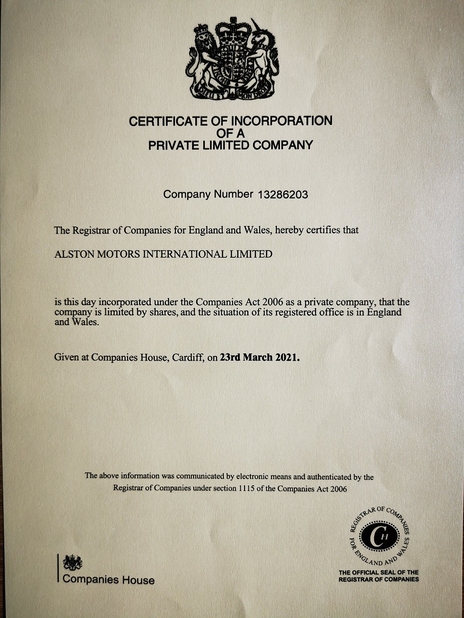
Qingdao Alston Motors Co., Ltd, a key exporter of quality used Howo trucks to West Africa, has seen Nigeria remain one of the most consistent destination markets for used Howo 6x4 dump trucks and used Howo 8x4 dump trucks precisely because of projects like this. Roads remain the backbone of Nigeria's logistics system, and the machinery to build them flows from the same supply chains.
Beyond dump trucks, the highway build also pulls demand for used Howo tractor trucks to haul construction materials, fuel, and prefabricated components between Lagos and the various active construction fronts. The 60-metre flyover being constructed near the Dangote Refinery to facilitate truck movement — reported during earlier site inspections — is itself a signal of how central heavy truck logistics are to the project's execution.
Which Howo Models Are Best Suited for This Work
For bulk earthmoving and sand fill transport on the coastal highway corridor, the used Howo 6x4 dump truck in the 371HP configuration is the standard choice. It delivers a box volume of 16 to 20 cubic metres, handles public-road weight limits, and is compatible with the types of haul routes between material yards and active construction zones in Lagos and its neighbouring states.
For heavier site work — particularly where deep soil conditions are being managed, fill platforms are being built, and material is moved over shorter but steeper or unstable haul roads — the used Howo 8x4 dump truck provides the extra axle load and payload capacity needed. The 420HP engine option is favoured where gross vehicle weights push toward regulatory limits and terrain is mixed.
Concrete logistics for the continuously reinforced concrete pavement (CRCP) that defines this project also benefits from used Howo mixer trucks, which can service batch plants located near each active construction section. The rigid pavement specification — at 280 millimetres of concrete thickness per the contractor's confirmed standard — means concrete volume requirements are very high per kilometre of finished road.
Fleet operators working in support of longer-range material supply chains benefit from used Howo tractor trucks with flatbed or tipper trailers, covering runs from port or rail yards to construction stockpile points along the corridor. Nigeria's HOWO parts network in Lagos, Port Harcourt, and Warri keeps downtime manageable on these routes.
Sourcing Trucks for Nigeria's Construction Boom
With multiple financing tranches already closed and active construction spreading across several states, Nigerian fleet buyers are not waiting for the full 700-kilometre project to take shape before investing in equipment. The concrete evidence of funded, commissioned construction is the trigger. Operators who moved early on the Lagos end are already running positive utilisation rates.
Qingdao Alston Motors Co., Ltd supplies export-ready used Howo trucks inspected and prepared specifically for Nigerian operating conditions, including high ambient temperatures, variable fuel quality, and the long daily run cycles that characterise construction-support logistics in West Africa. Trucks are shipped from Qingdao to Lagos or Port Harcourt depending on where the buyer is operating.
Buyers sourcing used Howo dump trucks for Nigeria should prioritise 2017 to 2021 model years for the best balance of engine life, parts availability, and compliance with import age restrictions. The used Howo A7 series is a strong option for operators wanting MAN-technology drivetrains in a proven chassis. For buyers focused strictly on running cost, the standard used Howo 336HP dump truck remains available in volume and is the most parts-accessible unit in the Nigerian market.
Contact usedhowotrucks.com for current stock lists, export documentation support, and shipping schedules to Lagos and Port Harcourt.
Sources

 Your message must be between 20-3,000 characters!
 English