UsedHowoTrucks.com — April 24, 2026
Table of Contents
Overview
On April 23, 2026, Nigeria's Minister of Works, David Umahi, confirmed to a joint delegation from ECOWAS and the African Development Bank that Section One of the Lagos-Calabar Coastal Highway is complete and will be commissioned in May 2026. The briefing — held in Abuja just one day ago — underscores that Nigeria's most ambitious road project is now in its final pre-launch phase, with construction continuing in parallel on sections spanning Ogun, Akwa Ibom, and Cross River States. For contractors, hauliers, and fleet operators supplying the remaining 650-plus kilometres of work ahead, demand for heavy-duty trucks — including used HOWO dump trucks for Nigeria — is entering a sustained high-demand cycle that will last for years.
Project Status: Section One Complete, May Target Confirmed
Section One covers 47.47 kilometres from Ahmadu Bello Way, Victoria Island, to Eleko Junction in Lagos State. Construction began in March 2024, and over 70% of the section was already complete when the $747 million Deutsche Bank-led syndicated loan was finalized in mid-2025. (Source: Nigeria Federal Ministry of Finance, July 2025.) The remaining stretch — complicated by soil pits exceeding 20 metres in depth — has been handled by Hitech Construction Company at no additional cost variation. Minister Umahi stated during the April 23 ECOWAS/AfDB briefing that Section Two, a 55-kilometre stretch reaching the Ogun State boundary, is expected to be completed by December 2026, while construction is also advancing in Akwa Ibom and Cross River States.
The $747 million Phase 1, Section 1 financing was syndicated through Deutsche Bank as Global Coordinator, alongside First Abu Dhabi Bank, Afrexim, the Abu Dhabi Exports Office, EBID, Nexent Bank, and Zenith Bank. Political risk insurance was provided by ICIEC. Financing for subsequent phases is already being structured, indicating this project will generate continuous procurement activity for heavy haulage equipment well into the late 2020s.
The Scale: 700km, $13 Billion, Nine States
The full Lagos-Calabar Coastal Highway spans 700 kilometres and will pass through Lagos, Ogun, Ondo, Edo, Delta, Bayelsa, Rivers, Akwa Ibom, and Cross River States. Estimated total project cost sits between $11 billion and $13 billion, making it the largest road infrastructure undertaking in Nigeria's history. The highway is built using Continuously Reinforced Concrete Pavement (CRCP), engineered for a minimum 50-year lifespan. At this scale, the volume of materials — aggregate, concrete, sand, water — that must be moved daily across active construction fronts is substantial. That movement is done almost entirely by road-going heavy trucks.
Nigeria is simultaneously advancing the 1,028-kilometre Lagos-Abidjan Corridor, a multinational route connecting Ivory Coast, Ghana, Togo, Benin, and Nigeria, for which Umahi chairs the steering committee. Both projects run in parallel, collectively representing the largest concentration of active highway construction on West Africa's Atlantic coast.
Why This Drives Demand for Used HOWO Trucks in Nigeria
Road construction at this scale requires a continuous supply of dump trucks for aggregate and earthworks, mixer trucks for concrete paving, water tankers for compaction and dust control, and tractor units for logistics along completed stretches. Haulage contracts on Nigerian federal projects are typically awarded to Nigerian-owned businesses, which means local fleet operators are the direct buyers. Most small and medium transport companies in Nigeria cannot absorb the capital cost of new European or North American trucks. Used HOWO trucks for sale in Nigeria fill that gap — offering proven durability, widely available spare parts across Lagos, Port Harcourt, and Calabar, and acquisition costs that allow faster fleet expansion under contract pressure.
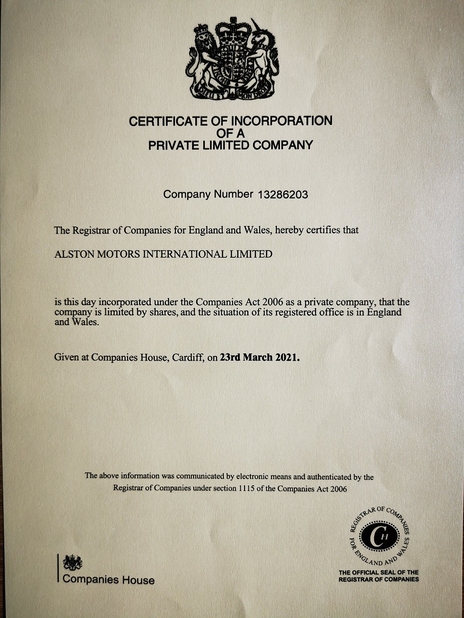
Qingdao Alston Motors Co., Ltd has supplied used HOWO trucks to Nigerian fleet operators for construction and logistics applications, with full export documentation support, pre-shipment inspection coordination, and compliance with the 2026 MOFCOM used vehicle export framework. For operators bidding on construction supply contracts along the coastal highway corridor, having trucks on site and working before award season closes is the operational priority.
Key Truck Configurations for This Project
Different tasks on a concrete highway project call for different platforms. For bulk earthmoving and aggregate delivery along haul roads, a used HOWO 6x4 dump truck in the 20-25 cubic metre box range is the standard choice. Its 6x4 drivetrain handles compacted laterite and soft fill sections that are common on coastal ground. For high-payload site work or overburden removal during ground preparation, an used HOWO 8x4 dump truck provides greater carrying capacity per trip.
Concrete paving operations require a steady flow of transit mixer trucks. A used HOWO concrete mixer truck with a 6-8 cubic metre drum and a 371hp engine is the most common platform on Nigerian construction sites. Water supply for compaction and CRCP curing is handled by used HOWO water tanker trucks, typically in the 15,000-20,000 litre range. For logistics from supply depots to active construction fronts along the 700km corridor, a used HOWO 6x4 tractor truck pulling a flatbed or curtainsider is the standard solution.
Fleet operators already working on Section Two or tendering for Ogun, Ondo, and Edo sections should also assess used HOWO trucks for West Africa construction projects with verified mileage, clean frames, and manufacturer-compliant export paperwork — all of which Qingdao Alston Motors Co., Ltd provides directly.
Sourcing Guidance for Nigerian Fleet Operators
Nigeria's import rules for used commercial vehicles allow trucks up to 15 years from manufacture under HS Code 8704. In 2026, this means 2011 models and newer are eligible; operators should target 2014 and newer to stay comfortably within limits regardless of any future tightening. All trucks must be left-hand drive — standard on HOWO export models built for Africa.
China's 2026 MOFCOM export regulations require that any vehicle registered in China for fewer than 180 days at time of export must carry an official After-Sales Service Confirmation Letter from the manufacturer. For genuinely used trucks with real operating history, this requirement has no practical effect. Buyers should confirm the vehicle's first Chinese registration date before committing and work only with exporters who can provide full documentation for Nigeria Customs Service clearance at Apapa, Onne, or Tin Can Island Port. See related guides: how to import used HOWO trucks to Nigeria.
For operators sourcing multiple units for a construction contract, pre-shipment inspection by an independent third party in China adds a meaningful layer of assurance on engine condition, chassis integrity, and mileage. Reputable exporters accommodate this without obstruction.
Sources

 Your message must be between 20-3,000 characters!
 English